Cart

Your cart is empty.
Explore your product matches or browse a nearby dispensary to find something that’s right for you.
0 of 6 strains
No cultivars to compare. Add some from the cultivar cards!
Create a free account to rate and review strains.
Explore your product matches or browse a nearby dispensary to find something that’s right for you.
What is CBDA? In this chapter of our cannabinoids guide, we discuss what this compound is, what its effects are, and if there are any potential benefits.
Chapter 9 · 4 min read
CBDA, or cannabidiolic acid, is the most common acidic compound found in the cannabis plant. CBDA acts as a precursor, or parent, to the much better-known cannabinoid CBD. Essentially, CBDA is the raw form of CBD.
When CBDA is dominant in a cannabis plant, it’s called type III cannabis by researchers, or simply hemp. Since cannabis plants generally favor making one of the acidic cannabinoids over another, high CBDA cultivars carry low amounts of other acidic cannabinoids (e.g. THCA or CBGA).
CBDA is quite delicate and requires special handling to extract and process. When exposed to heat, certain extraction processes, air, long shelf-life, or even digestion – CBDA readily converts to CBD in a short time. This process is known as decarboxylation. The amount of time this process takes depends on the cultivar, the temperature, and the type of heat or extraction used, but happens pretty fast if not careful.
CBDA is plentiful in high-CBD cultivars and hemp carrying low THC. We can find this compound in products such as capsules, topicals, and tinctures. Juicing raw cannabis leaves is also a popular consumption method for ingesting CBDA and CBD. Keep in mind, blender heat may degrade some or even all the CBDA into CBD.
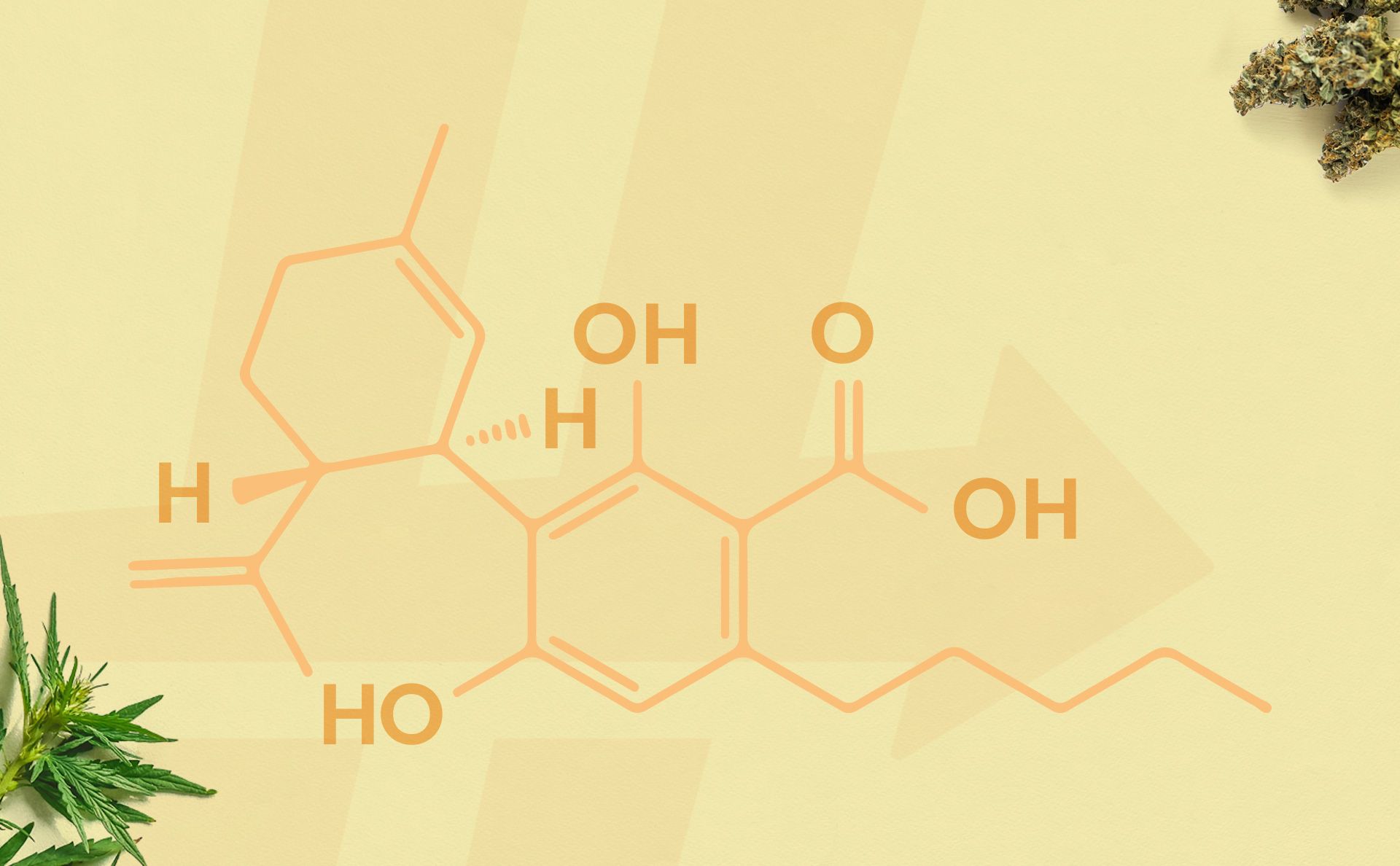
Like its close relative CBD, CBDA is a non-impairing compound. Unlike THC, CBDA will not make consumers feel high.
Instead, CBDA quickly breaks down into CBD in the body. CBDA is 1000 times more potent than CBD at serotonin receptors. Breaking down into CBD increases levels of anandamide, a feel-good endocannabinoid that helps alleviate anxiety and regulate mood, among other things.
Because of this, some beginner consumers of CBD and CBDA products may feel a profound sense of relief, unlike anything they’ve ever experienced. This can result in relaxation, antidepressant effects, and stress relief.
What the expert says...
"CBDA is the parent to CBD, and is about three times better absorbed than neutral CBD. Since CBDA quickly degrades into CBD, including within the body, this means you can likely reap the benefits of CBD and CBDA at lower doses."
Much like its close relative CBD, many scientific studies have been conducted on CBDA. The vast majority of these students were done on rodents in a laboratory setting. Researchers have been observing the reactions lab mice have to CBDA since 2003.
To be clear, there aren't any clinical studies done yet on CBDA. This means that the potential benefits aren’t confirmed, and are not yet fully known. Based on animal and computer studies, CBDA may be:
CBDA is delicate and quickly metabolizes into CBD in the body. You may notice increased effectiveness over CBD, since CBDA is estimated to be three times better absorbed than regular CBD. It’s also better absorbed within an hour or two after meals.
On the other hand, increased absorption also means you are more likely to experience side effects at lower doses than plain CBD. You could experience mild, temporary side effects that are common to CBD, such as:
Gastrointestinal disturbance Tiredness and sleepiness Loss of appetite Increased liver enzymes
CBDA is generally safe and well-tolerated. Serious side effects are rare, but may occur if taken with anti-epileptic medications. It’s important to tell your doctor about any cannabinoid use, including CBDA and CBD.
CBDA is just one of the many cannabinoids and other potentially beneficial compounds in whole-plant cannabis medicine. Here’s what else we learned about CBDA:
Ready to keep moving towards completing this guide? Answer the question below and let’s advance.
What happens to CBDA when exposed to heat?
Dr. Abraham Benavides
Dr. Abraham Benavides is an internationally-recognized cannabis research expert, experienced medical advisor, and full-tuition merit scholar of the George Washington University School of Medicine and Health Sciences. Dr. Abe enjoys helping patients as a writer, educator, and cannabis health coach at the GW Center for Integrative Medicine.