Cart

Your cart is empty.
Explore your product matches or browse a nearby dispensary to find something that’s right for you.
0 of 6 strains
No cultivars to compare. Add some from the cultivar cards!
Create a free account to rate and review strains.
Explore your product matches or browse a nearby dispensary to find something that’s right for you.
The terpene myrcene is the most abundant of all of these compounds found in cannabis. In this chapter, we cover the aroma and flavor of myrcene. We also discuss which cultivars contain the most myrcene, and what the science says about whether it has any medicinal benefits.
Chapter 6 · 5 min read
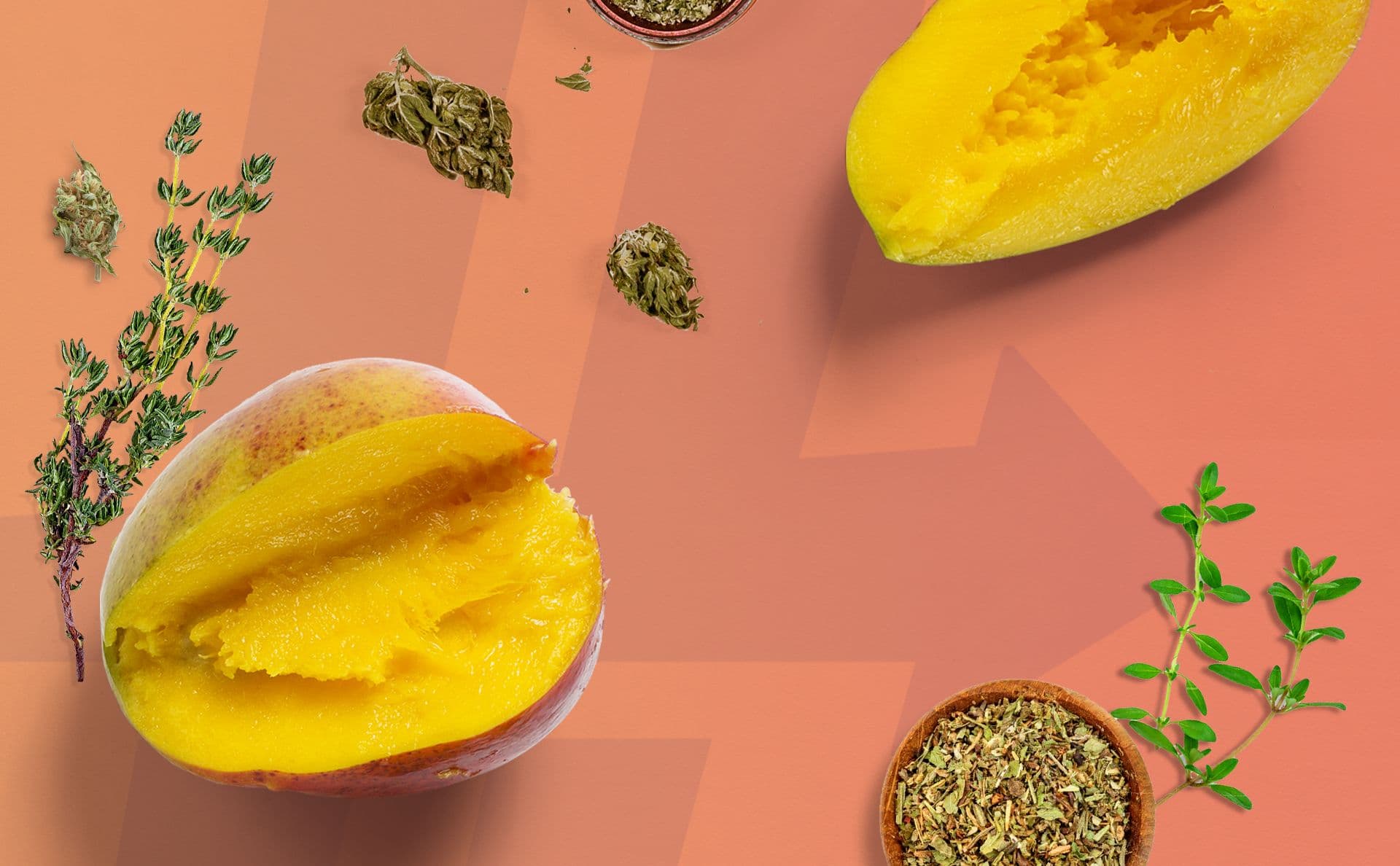
This chapter of our Terpenes Guide covers the terpene myrcene, the most abundant of these compounds found in cannabis. Here, we cover what myrcene smells and tastes like, which cultivars contain it, and its benefits.
Pronounced “mere-scene,” myrcene is the most abundant terpene in today’s cannabis. It accounts for more than half of the terpene profiles of popular cultivars, mainly associated with what retail calls “indica” cultivars. This herbal, earthy terpene shows up in many kush and purple cultivars as well. It is also a bit citrusy. Also found in hops and rosemary, myrcene is considered good for relaxing and alleviating insomnia because of its sedating nature.
Myrcene is a notable part of many plants and fruits, not just cannabis, of course. These plants include:
While myrcene is found in all the aforementioned plants and fruits, it is perhaps the most abundant in hops, commonly used to brew craft beer including non-alcoholic varieties. According to research, myrcene can make up to 70% or more of the terpene content in hop essential oil.
With respect to the greater terpene complexity of cannabis, dominant terpenes like myrcene usually make up to around 35% of the total terpene content. While the top four terpenes will be 72% of terpene content.
While the flavor of the terpene myrcene can manifest itself in different ways depending on the plant, most often it is perceived as having a sweet, earthy scent. Myrcene typically has a hearty, musky aroma to most pallets, typically smelling of cloves or mangoes, depending on the source plant and concentration.
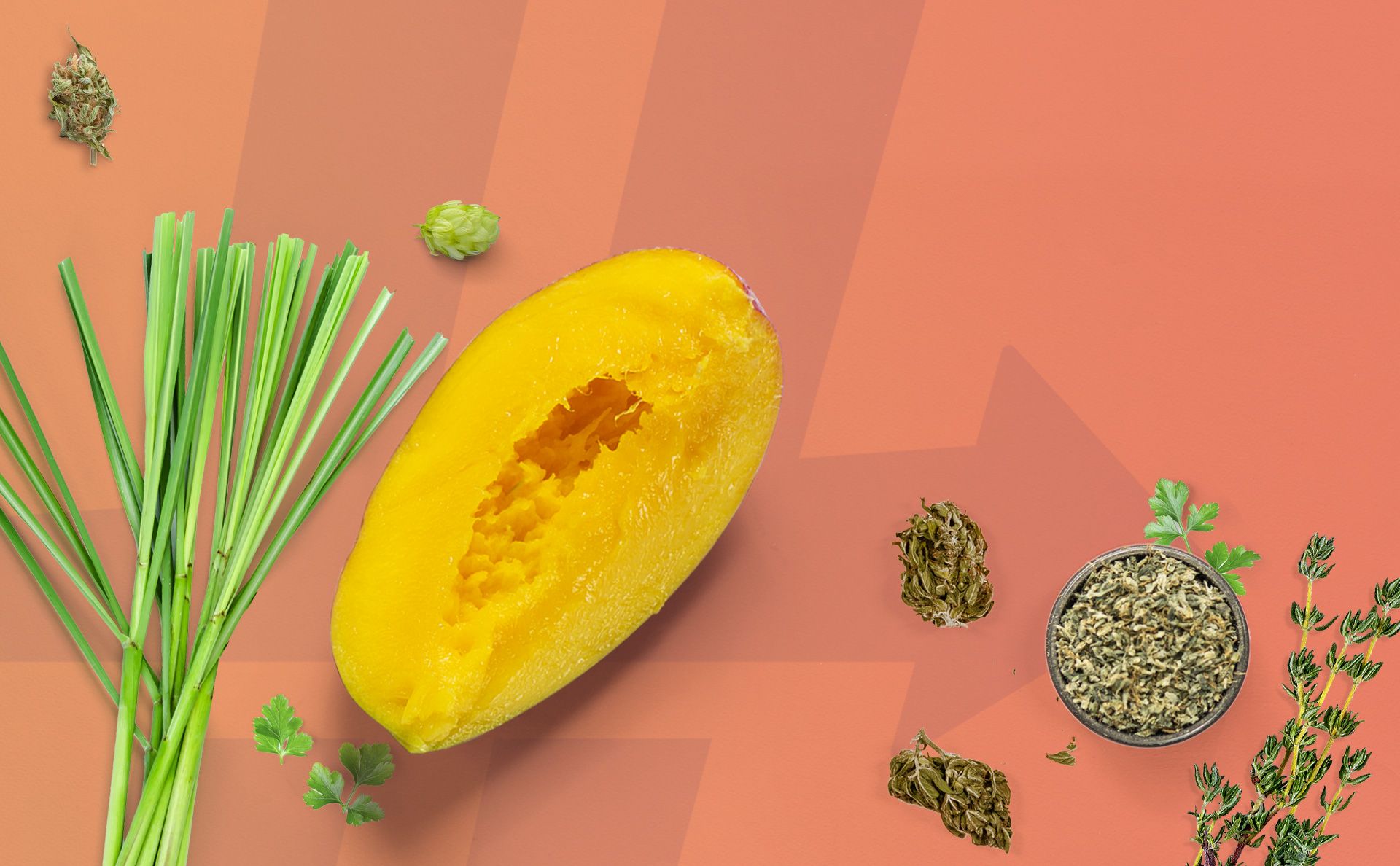
Myrcene is also found in hops, which is a primary component of beer, giving it a sometimes peppery or even spicy flavor. It also helps flavor dry hopped beer and non-alcoholic beers. To some, myrcene even gives off hints of balsamic vinegar and some subtle fruity undertones, as found in ripe mangos.
Plants give off aromatic myrcene to ward off pests and parasites, while beckoning beneficial pollinators that also eat those bugs. Myrcene also gives them an added antibacterial and antifungal edge.

What the expert says...
"The most abundant terpene found in cannabis, myrcene is also found in hearty, musky plants like hops and may offer sedating, pain-relieving, and anti-inflammatory benefits."
High-myrcene cultivars (>0.5%) are typically categorized as “indica strains” by retailers. Myrcene contributes to the famously sedating “couch lock” effect that fans of these cultivars enjoy. It also tends to go vice versa; cultivars with low myrcene content are more energizing and sativa-type.
Cultivar varieties like white, skunk, and kush are all especially high in myrcene, even though this terpene is abundant in all cannabis varieties. Popular cultivars that are prized for their high myrcene include:
In cannabis, myrcene is perhaps the biggest terpene-based component to be a part of the entourage effect. The entourage effect is how terpenes, cannabinoids, and other compounds in whole-plant cannabis work in conjunction to target receptors within and outside the endocannabinoid system and help with a multitude of ailments. For example, myrcene may also boost your body’s endorphins, which can improve mood.
When consumed on its own, the terpene myrcene will not get you high, because it does not work on cannabinoid receptors directly. However, studies have shown that myrcene may play a significant role when it comes to transporting cannabinoids to the brain. Investigators published in the journal Nutraceuticals outlines how myrcene could intensify the effects of cannabis by transporting THC and other cannabinoids to your brain.
The researchers also hypothesized that myrcene could enhance transdermal absorption, which also may increase the level of cannabinoids absorbed through the skin, as in topicals. Because myrcene potentially strengthens cannabinoid transport to the brain, while having its own anxiety-reducing and sedating effects.
While it’s considered non-intoxicating, new research reports that myrcene can be sedating enough on its own to impair driving abilities. Yet another good reason you should never drive or operate machinery while using cannabis.
With stronger research into these areas, this important terpene could play a major role when it comes to the entourage effect.
In some folk medicine traditions, lemongrass tea is said to have pain-relieving and sedative properties, providing tranquility and relaxation, often helping with insomnia. Myrcene is highly abundant in lemongrass, indicating that the terpene may have some benefits when it comes to rest and stress relief.
Like many other terpenes, myrcene is also said to have anti-inflammatory and anti-arthritic properties. In 2022, mice given pure myrcene with and without CBD had less pain and inflammation from chronic arthritis. This was based on previous work in 2015 that showed potential benefits in human cartilage cells, but is yet to be tested in live humans.
As is the case with many compounds with potential anti-inflammatory properties, myrcene may also work as an anti-tumor agent. In 2020, researchers published preclinical findings indicating that myrcene may help slow down tumor activity in several types of cancer cells including breast, colon, leukemia, liver, kidney, and cervical.
Myrcene may play a large role in what cannabis consumers often call the “couchlock” effect, due to its sedative properties. This is because the same receptors that relieve anxiety (GABA receptors) also cause sleepiness if activated strongly, repeatedly, or for a prolonged time.
Other potential benefits of myrcene we are still learning about include:
It’s a broken record at this point, but more research is crucial, both on terpenes and the entourage effect of whole-plant cannabis. Here’s what we learned about Myrcene in this chapter:
As the most abundant terpene in all cannabis, it’s also imperative that studies be conducted to determine whether it can be beneficial, as well as determine how it impacts our medicated effects. We believe that terpenes are the future of cannabis, and we look forward to seeing how these incredible compounds can help even more consumers.
Our next chapter covers another interesting terpene. Answer the question below and let's keep learning.
Myrcene is not a terpene that is overly common in cannabis.

Dr. Abraham Benavides
Dr. Abraham Benavides is an internationally-recognized cannabis research expert, experienced medical advisor, and full-tuition merit scholar of the George Washington University School of Medicine and Health Sciences. Dr. Abe enjoys helping patients as a writer, educator, and cannabis health coach at the GW Center for Integrative Medicine.