Cart
Your cart is empty.
Explore your product matches or browse a nearby dispensary to find something that’s right for you.
0 of 6 strains
No cultivars to compare. Add some from the cultivar cards!
Create a free account to rate and review strains.
Explore your product matches or browse a nearby dispensary to find something that’s right for you.
THCV is a special cannabinoid distinct from THC and the hundreds of other compounds found in cannabis. What is THCV, what are its effects, and what are its benefits? This chapter answers these questions and more.
Chapter 13 · 4 min read
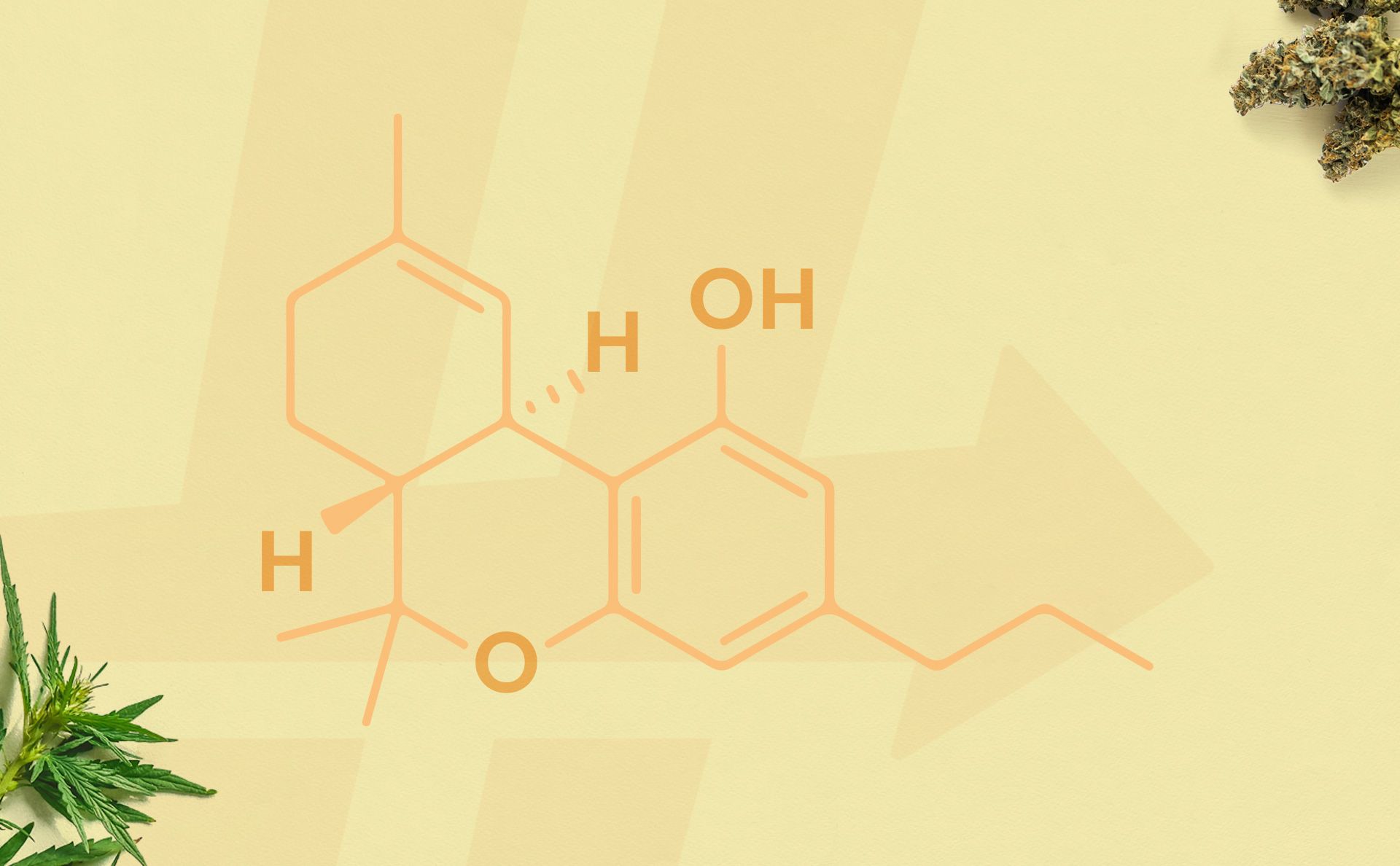
You may not have heard of it before, but THCV is actually the third-most studied cannabinoid out there. THCV, or tetrahydrocannabivarin, is nearly identical in molecular structure to its sibling cannabinoid, THC, except that it’s just 2 carbons shorter.
Like other cannabinoids It’s made from acidic precursors like cannabigerovarin acid (CBGVA), the varinic counterpart of CBGA, which gives rise to THCVA, and is then “decarbed” into THCV with heat or light.
THCV’s 3-carbon tail instead of a 5-carbon tail gives it the “-varin” title, and negates the intoxicating properties seen with THC. That’s because its tail is just long enough to bind CB1, but too short to trigger it in the same way.
Instead, THCV offers a mix of familiar and unique potential therapeutic benefits in ways we are continuing to understand. It shares several key properties with THC – while directly opposing some – all without the high. Some tout it as a weight loss or diabetes remedy, but with only small clinical studies behind it.
Counterintuitively, you can simply think of THCV as largely being the inverse of THC – doing the opposite of what you’d expect.
THCV can bind to CB1 with about half the affinity of regular THC. But it interacts with it in different ways. If THCV sees THC dancing closely with CB1, it will try to step in to break things up like a chaperone at a school dance. This behavior is called competitive antagonism.
If isolated, THCV produces very different effects than delta-9 THC. When alone, it behaves as an inverse agonist. Meaning that when it binds to CB1, it produces the exact opposite effects you normally expect from CB1. This means reduced highs, less appetite, and greater tolerability for a wider range of patients.
Beyond CB receptors, it also works on important receptors like TRP channels (i.e., TRPV1-4, TRPA1) for relieving pain, and serotonin receptors (e.g., 5HT1A) for improving mood and nausea.
What the expert says...
"THCV acts like the opposite of THC. It is often touted as an appetite suppressant, antidiabetic, and weight-loss drug. There is some clinical research behind this, but there are many other potential therapeutic properties to also understand and unlock."
There is some preliminary and clinical evidence that THCV has potential benefits. For instance, THCV may reduce appetite, the opposite of what THC does. We understand this because THCV inversely activates the CB1 receptor in the brain.
One of the early preclinical studies shows that when administered isolated THCV, THCV increased insulin sensitivity in obese mice. Some studies show mice ate less and lost weight, but some did not. Importantly, THCV did improve lipid and glucose metabolism in these mice.
Clinical research is more promising. A 2016 study found that THCV may reduce fasting glucose and glucose intolerance, suppress appetite, promote weight loss, and improve pancreatic B-cell function in type 2 diabetic patients.
Clinical studies have shown THCV is well-tolerated, safe, and doesn't have the same psychiatric risk that other CB1 blockers like rimonabant does. Rimonabant was a previously legal prescription CB1 blocker that was pulled off the market due to causing suicidal ideation.
It’s important to know that THCV is a safe and well-tolerated CB1 inverse agonist and selective antagonist we could use someday to treat type 2 diabetes, obesity, chronic liver diseases, and more. THCV shows many potentially therapeutic properties worthy of further investigation, like:
In clinical studies, THCV is well-tolerated in doses of 5mg twice daily. Beyond that, we don't know much about its potential side effects, but they are likely dose-dependent and may include:
No, there are also no known intoxicating effects of THCV, so it’s safe to ingest for adults, but does not get you high. In fact, it can reduce the high, memory impairment, and some of the uncomfortable mental and physical effects of THC.
The most common change in normal behavior is that people may feel a little more tired than normal after consuming THCV. We don't know yet how it affects special populations like kids and pregnant people.
Because THCV is a minor cannabinoid and an isolated compound, acquiring the cannabinoid is difficult. A limited number of cannabis plants actually produce amounts of THCV that are abundant enough to study with any relevance. However, new selective breeding techniques are giving rise to THCV-rich cultivars.
THCV can also famously be found in South African cannabis chemotypes, or “landrace strains”. One of the most popular cultivars on the market today that contains THCV in abundance is Dayslayer.
Be advised, there may be some industry actors who create semisynthetic THCV products. While the THCV inside may appear identical, the process to create it this way is messy and may leave behind unknown byproducts and residues that can cause short and long-term health effects we don't know about yet. Choose organic and certified THCV hemp products that are independently lab tested for safety and purity.
As is the case with all minor cannabinoids, products containing enough THCV for proper testing are lacking, which is the main cause of it being understudied. Here’s what we learned about THCV:
As we continue to remove the layers of cannabis prohibition, we will see increased yield and supply chain accessibility to quality cannabis. This may inspire cannabis producers to increase products and cultivars that contain THCV, which may then be studied.
You did it! You completed the Cannabinoids Guide on THCV! Excellent work. What’s next?
Does THCV get you high?
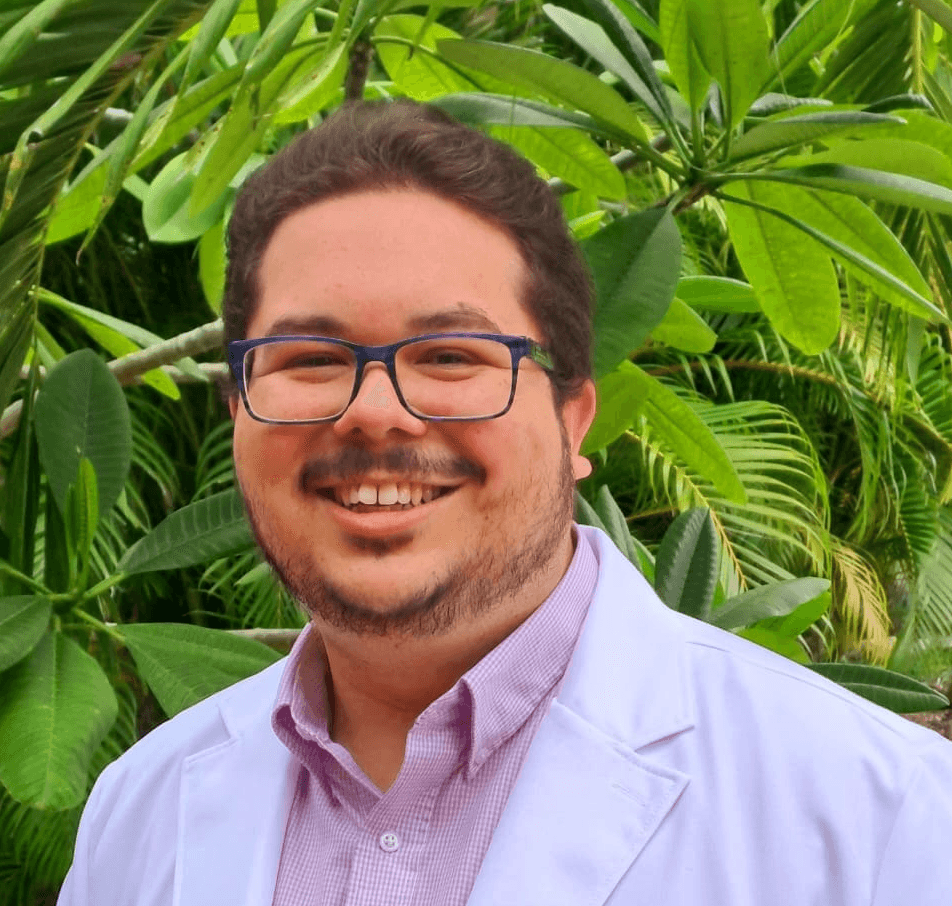
Dr. Abraham Benavides
Dr. Abraham Benavides is an internationally-recognized cannabis research expert, experienced medical advisor, and full-tuition merit scholar of the George Washington University School of Medicine and Health Sciences. Dr. Abe enjoys helping patients as a writer, educator, and cannabis health coach at the GW Center for Integrative Medicine.