How to Read A Cannabis COA
In an industry that thrives on transparency and quality assurance, understanding laboratory reports like the Certificate of Analysis (COA) becomes paramount. For many consumers, however, COAs might come across as a maze of scientific data. This chapter breaks down "How to Read a COA," aiming to streamline this process for you.
Chapter 6 · 6 min read
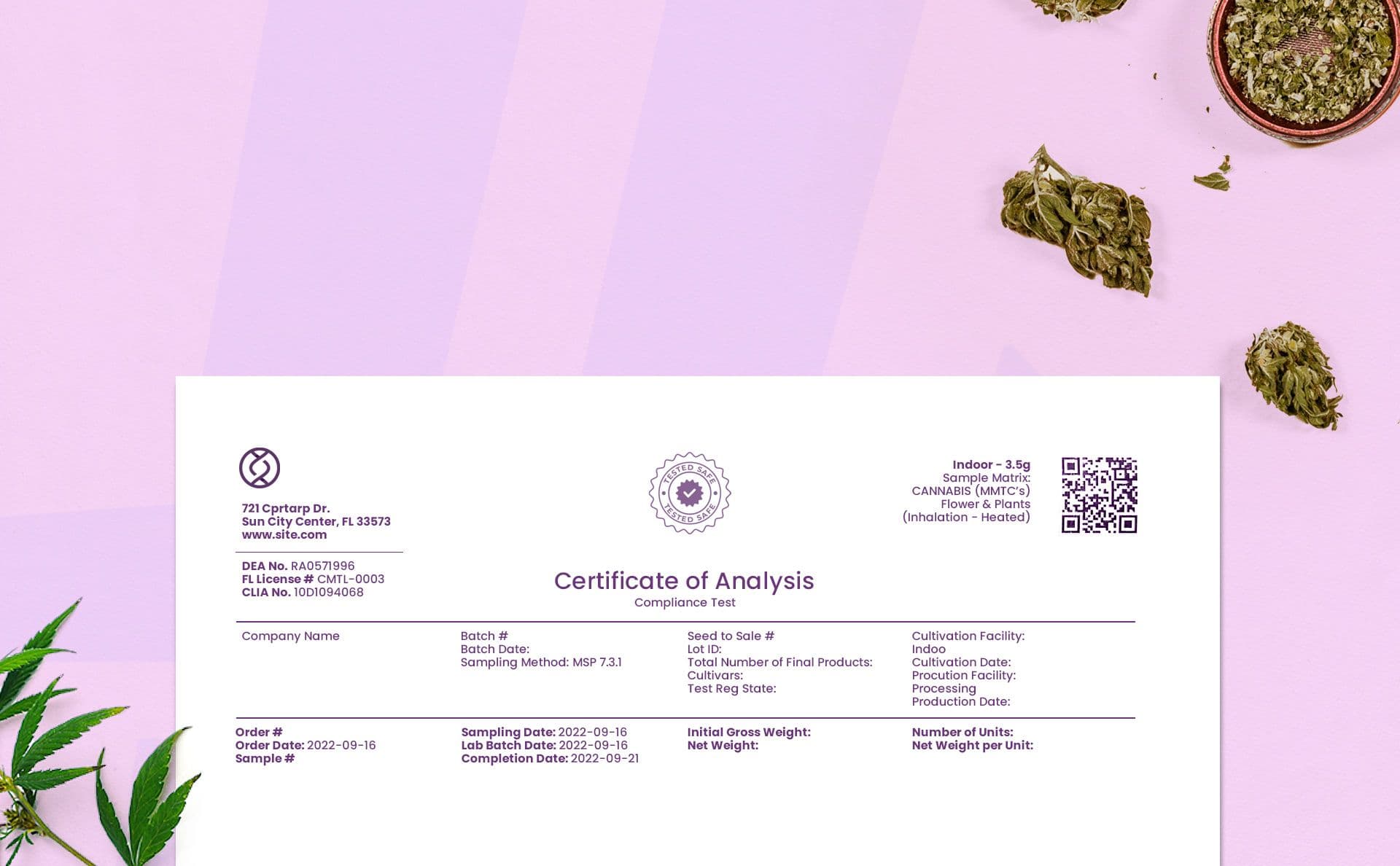
In today's ever-evolving market landscape, the quest for transparency, especially in product quality and safety, has never been more pressing. Amid this backdrop, a Certificate of Analysis (COA) emerges as a pivotal document, standing as a testament to a product's authenticity and its adherence to safety standards. But for the uninitiated, a COA can appear as a bewildering matrix of scientific terminologies and data. Fear not, for this chapter aims to demystify this essential document. Whether you're a consumer striving to make informed choices or a brand aiming to grasp the intricacies of your products, by the end of this journey, you'll navigate COAs with confidence and clarity.
Beginning with the COA Header
Before diving deep into the intricacies of the Certificate of Analysis (COA), it's paramount to begin at its front door: the COA Header. This section isn't merely a preliminary overview – it's a crucial indicator that sets the tone for the report's credibility. Ensuring its accuracy not only guarantees that you're analyzing the correct product's data but also instills confidence in the subsequent sections.
**What to take note of: **
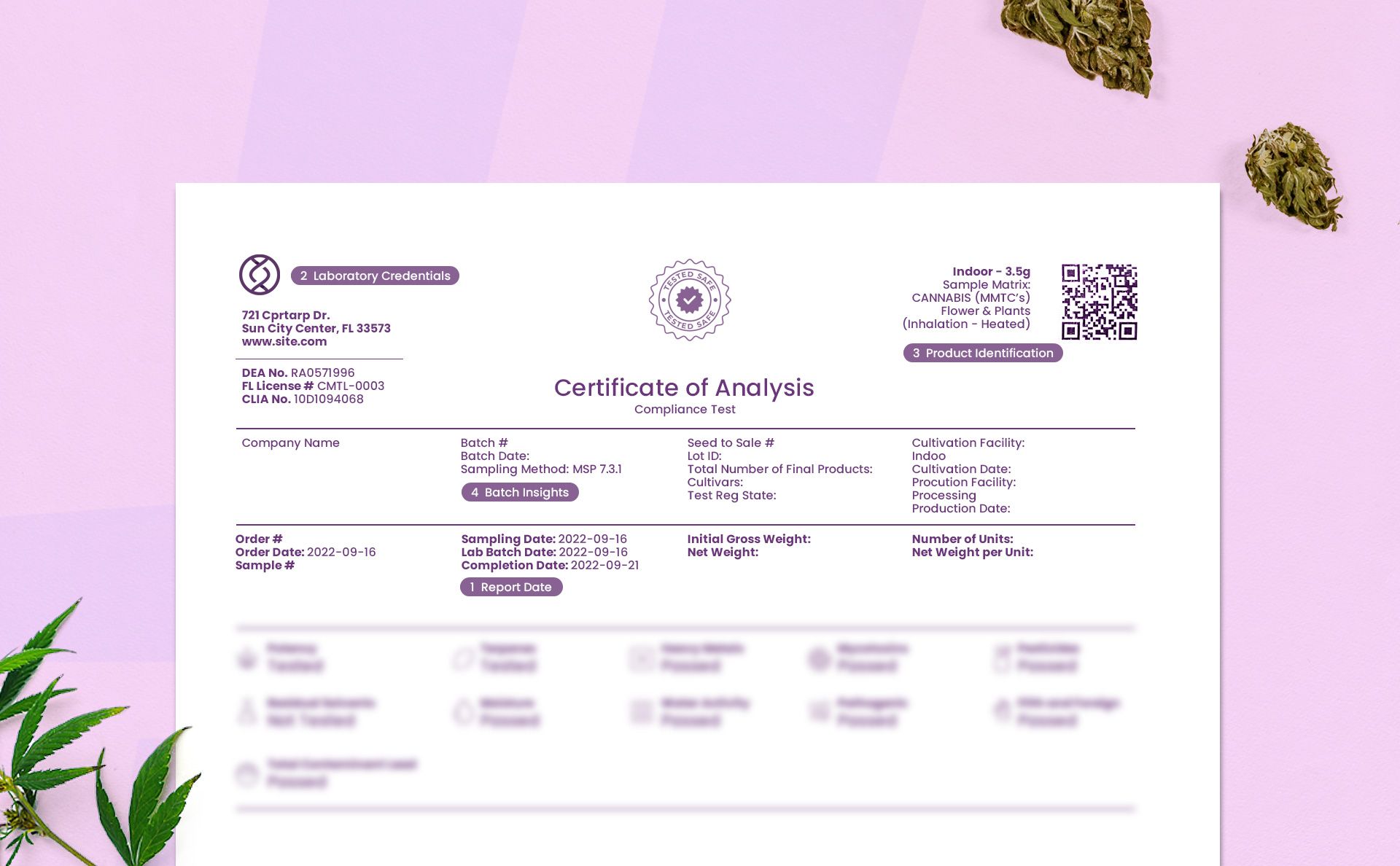
- Report Date: Always ensure the COA showcases a recent date to guarantee its current relevance.
- Laboratory Credentials: A legitimate third-party laboratory's name should be clearly visible, allowing you to validate its credibility.
- Product Identification: The COA should resonate with the product's brand name and description you have. Ensure they align perfectly.
- Batch Insights: The batch number and product specifics on the COA should be consistent with the product in hand.
The Test Summary
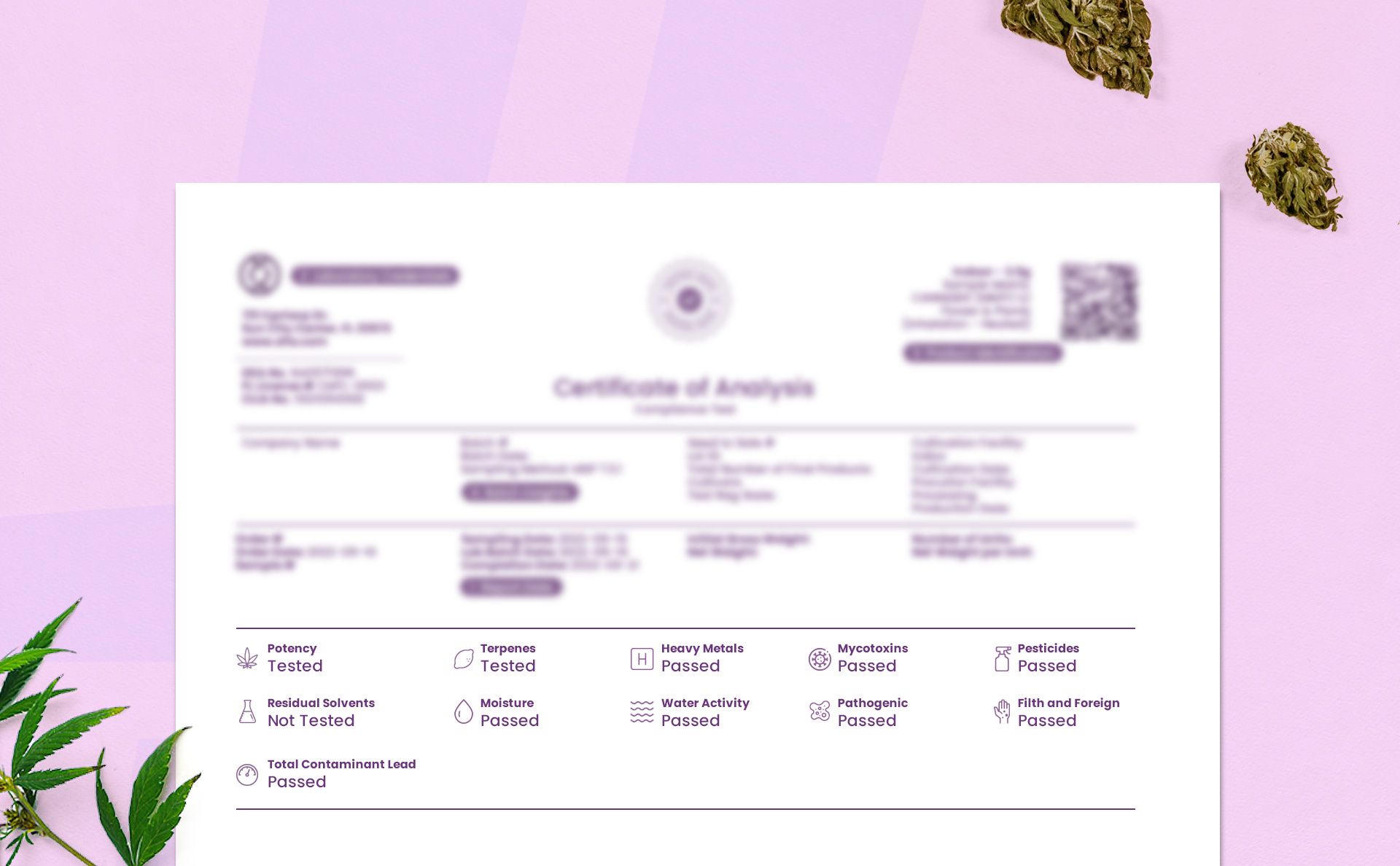
As you navigate past the COA Header, your next pit stop is the Test Summary – a section serving as more than just a cursory glance at test types and results. This is your first opportunity to gauge the thoroughness of the testing process. A well-rounded Test Summary is a barometer of product quality, offering vital clues as to what the brand prioritizes in their safety and potency evaluations.
Crucial Elements to Pay Attention to:
- Scope of Testing: While some brands may focus solely on evaluating cannabinoid potency, a more comprehensive approach includes tests for terpenes, flavonoids, and various contaminants.
- Green Flags: Don't settle for a product that merely "passes" certain tests. Look for a product that has been subjected to and cleared a broad range of safety and quality assessments.
- Consumer Awareness: Always opt for brands that transparently provide complete testing data. A full spectrum of tests not only ensures product safety but also equips you with the knowledge to make an informed choice.
Unraveling Potency Results (Cannabinoids, Terpenes, and Flavonoids)
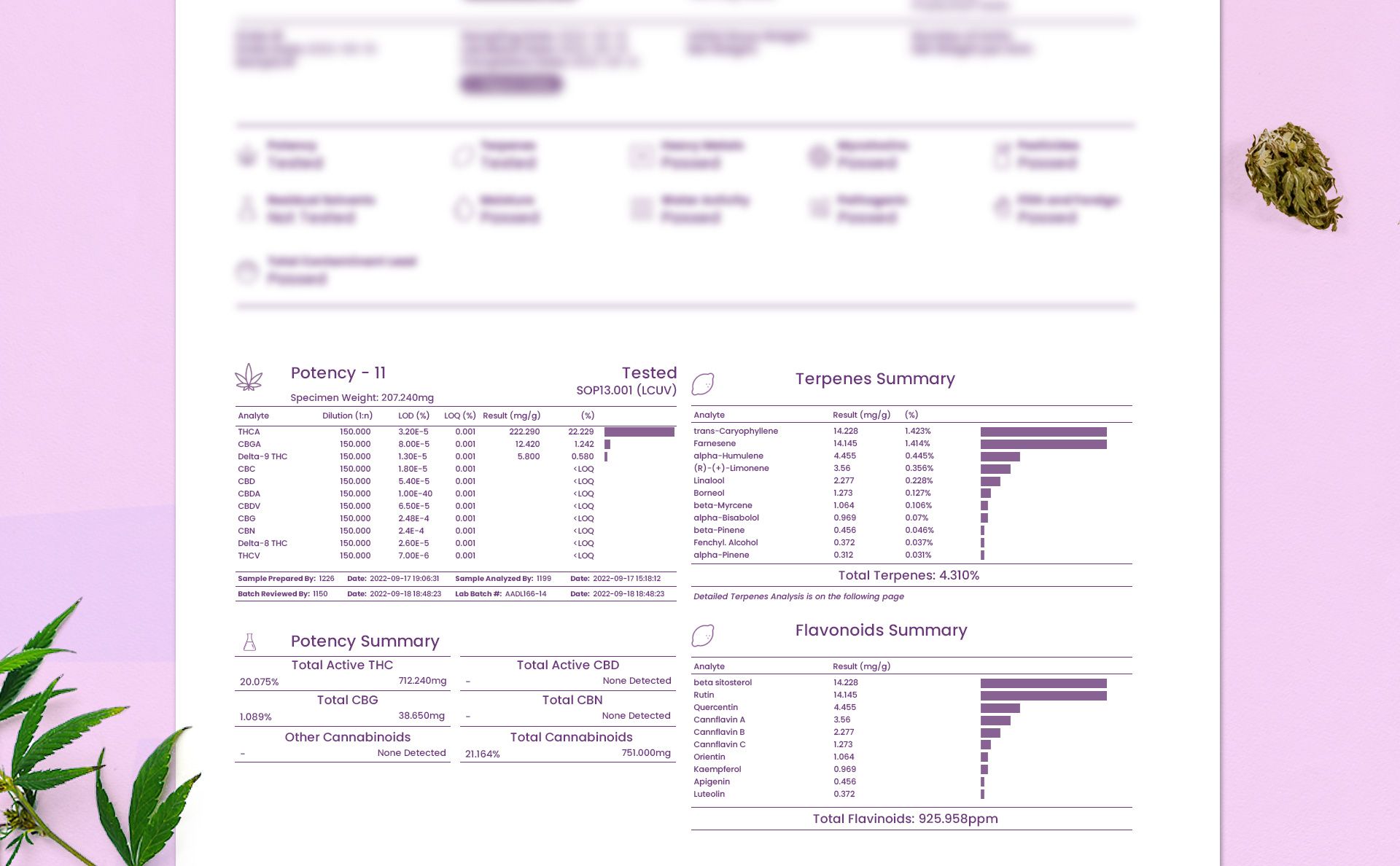
Beyond the surface-level details in the initial sections of a COA, here's where the true essence of the product starts to unfold. This segment meticulously details the myriad of compounds present in the product, painting a vivid picture of its potency and profile. As you traverse this section, you're not merely glancing at data – you're piecing together the product's very molecular blueprint.
Understanding the Data:
- Analyte Breakdown: This pertains to the specific compound under examination – be it cannabinoids like THC, terpenes such as linalool, or flavonoids like quercetin.
- Result Interpretation: The Result column deciphers the concentration of each analyte per gram. For liquids, this might be presented in milliliters. Instances where you find <LOQ or ND indicate either a concentration below the "limit of quantitation" or the compound wasn't detected.
- Percentage Conversion: The % column transposes the analyte concentration into a percentage of the product's overall weight—a more intuitive interpretation for many consumers.
Navigating Quality & Safety Results
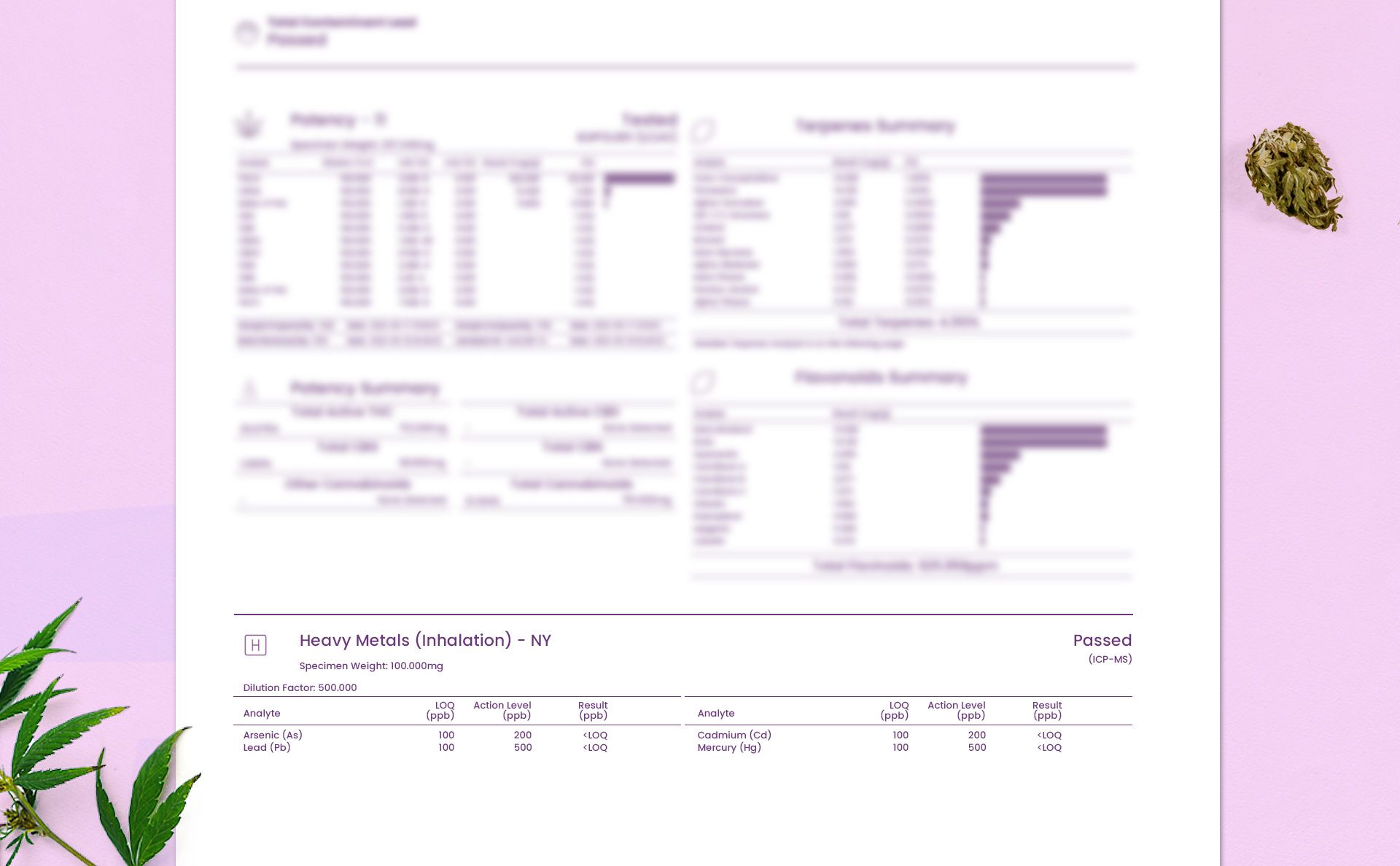
Transitioning from the potency profile, the subsequent segment of the COA dives into an equally paramount realm: the purity and safety of the product. These results are a testament to the meticulousness of the testing process, scanning for a spectrum of potential adulterants ranging from residual solvents to hazardous metals and beyond. As you embark on understanding this section, you're delving into a testament to the product's adherence to quality and safety standards.
How to Dissect the Data:
- Analyte Spotlight: Here, specifics like heavy metals will be in focus.
- Verifying Compliance: Cross-check the 'Action Level' column, which showcases permissible levels of each analyte, keeping in mind state and federal benchmarks. This is often represented in ppm (parts per million) or ppb (parts per billion), with 1 ppm equivalent to 1 mg/kg and 1 ppb equaling 1 µg/kg.
- Decoding Results: Spotting “<LOQ” against an analyte implies its levels are beneath the “Limit of Quantification,” indicating the lab has verified its concentration to be safely below the threshold.
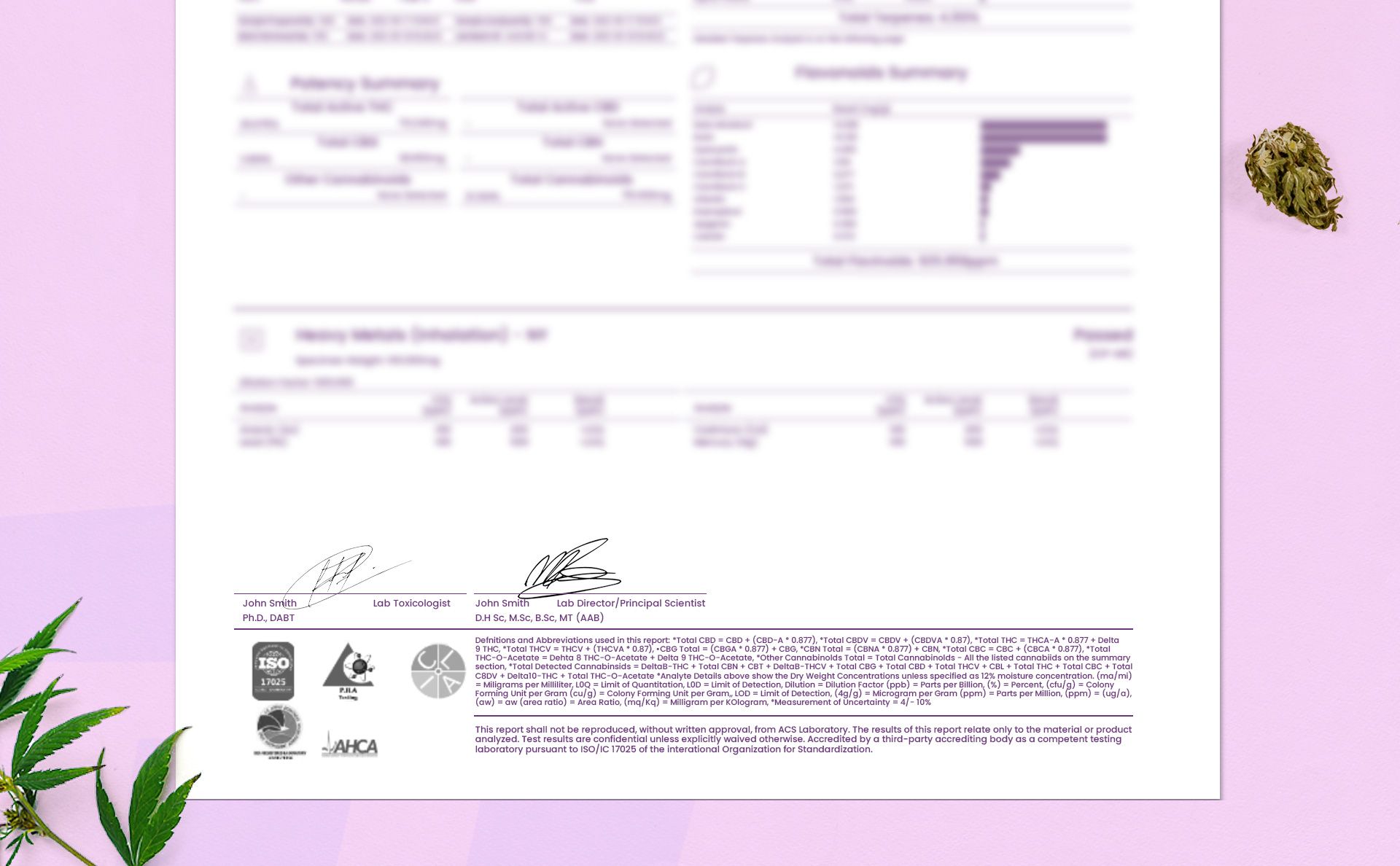
The COA Footer - The Seal of Authenticity
The footer isn't just a formality. Endorsed by the third-party lab's top brass, it's a testament to the report's veracity. Additionally, it furnishes laboratory contact details for those keen on diving deeper.
By the end of this chapter, you should be equipped to navigate the intricate maze of a Certificate of Analysis, ensuring you're always informed and confident in your product choices.
Bottom Line: How to Read A Cannabis COA
Navigating the intricate details of a Certificate of Analysis (COA) need not be a daunting endeavor. As we've unraveled in this chapter, with the right knowledge and understanding, this document becomes an invaluable tool in affirming product quality, safety, and transparency.
Always remember, as consumers, you're entitled to know what you're consuming or using. And a COA serves as a bridge to this knowledge.
We hope this chapter empowers you to make more informed decisions, ensuring you prioritize safety, quality, and integrity in every product choice you make. Always let knowledge be the foundation of trust and assurance.
What We Learned: How to Read A Cannabis COA
Learning how to read a cannabis COA is essential to becoming an informed consumer. Here are a few key takeaways from this chapter:
- The COA Header is vital in establishing the report's authenticity, ensuring that product details, laboratory credentials, and report dates are consistent and current.
- Beyond just cannabinoid potency, a well-rounded COA should detail screenings for terpenes, flavonoids, and potential contaminants. Always verify that the product has successfully passed all safety evaluations.
- Navigate the intricate Quality & Safety Results by understanding permissible analyte levels, keeping an eye out for indications like "<LOQ" which confirm contaminants are below the safe allowable limit.
Ready for the next chapter in our Cannabis Industry Guide? Answer the question below, and let's continue learning.
Test your knowledge, track your progress and earn your badge.
It’s essential to reference the COA Header first.
- ACS Laboratory: Certificate Of Analysishttps://www.acslab.com/certificate-of-analysis