Cart
Your cart is empty.
Explore your product matches or browse a nearby dispensary to find something that’s right for you.
0 of 6 strains
No cultivars to compare. Add some from the cultivar cards!
Create a free account to rate and review strains.
Explore your product matches or browse a nearby dispensary to find something that’s right for you.
What is Delta-8 THC? Is it legal? What are the effects of Delta-8? This chapter of our Cannabinoids Guide answers these questions and more.
Chapter 5 · 7 min read
Delta-8 THC is a hot-button issue and a popular cannabis product. How different is it from its sibling delta-9, how does it relate to other cannabinoids? In this chapter, we answer these questions and cover some of the legality surrounding this cannabinoid.
Cannabis has been consumed by humans for millennia, and the plant is full of compounds like cannabinoids, terpenes, flavonoids, and more. There are over 550 compounds and over 100 cannabinoids found in cannabis, including trace amounts of natural delta-8. Since delta-8 has been so rare until recently, the cannabinoids we know the most about from studies are delta-9 THC and CBD.
Delta-8 has many similarities to delta-9 THC, but it does have some noteworthy differences. Delta-8 is not as psychoactive as delta-9 because the two cannabinoids are different only by a single atomic double bond. Delta-8 (D8) can produce a decent effect of its own, estimated by researchers to be between 50–75% the potency of delta-9 THC. One of the most noticeable differences is that Delta-8 only occurs naturally in the cannabis plant in trace amounts, meaning usually less than 1% in most dried and cured flower.
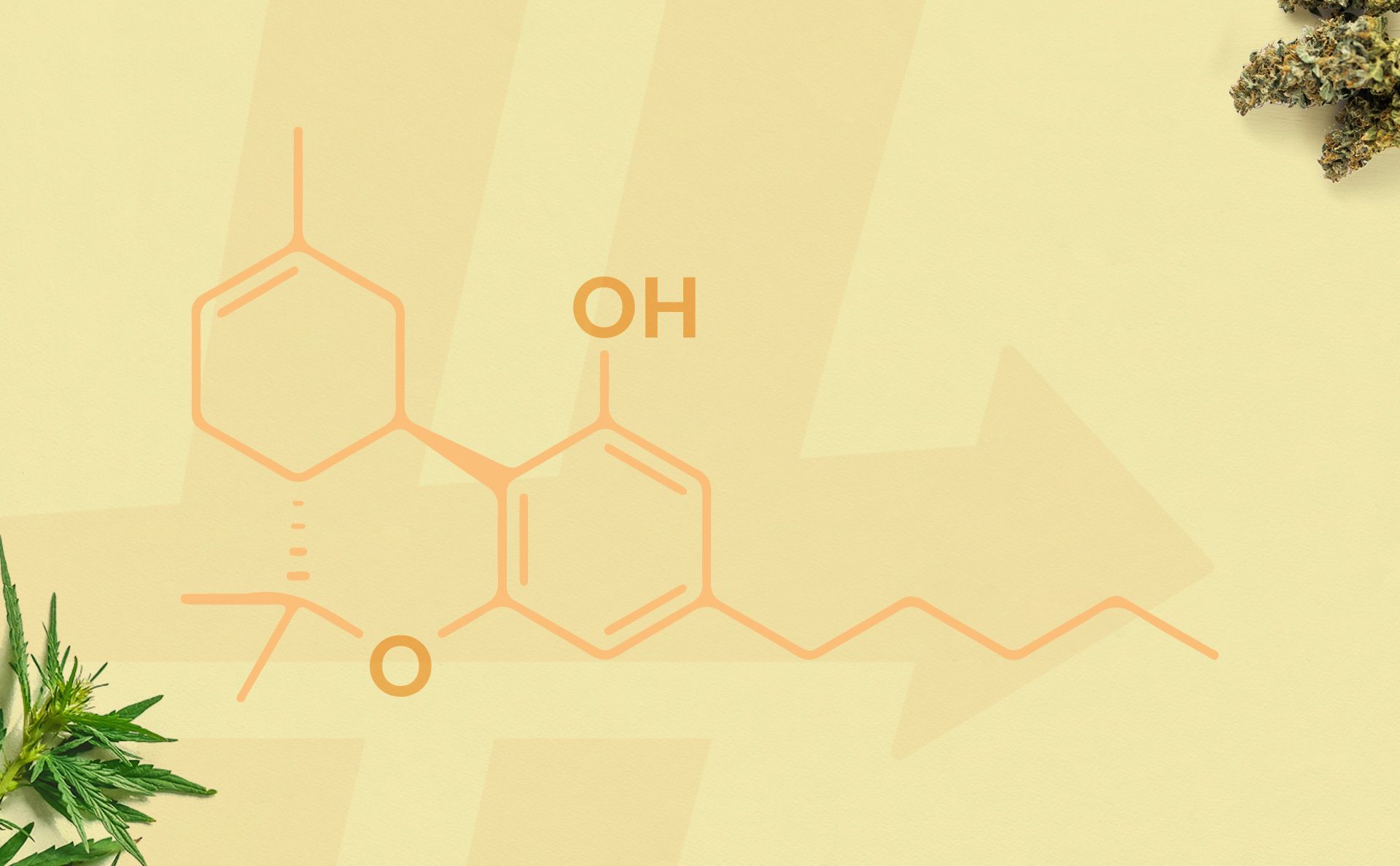
Thanks to a widely-recognized loophole in the 2018 Farm Bill, delta-8 can be distilled and made into cartridges and other products. Cannabis companies are now synthesizing and concentrating more semisynthetic compounds like delta-8, as each one can potentially offer specific effects and benefits.
To meet legal and retail demands, delta-8 is made from hemp. This is done by extracting large amounts of non-impairing CBD first, and then converting it into delta-8 in a harsh, acidic process.
Cannabinoids like delta-8 THC specifically interact with the endocannabinoid system, among a few other likely targets like dopamine and serotonin. Delta-8 can bind to both CB1 and CB2 receptors, which could lead to some significant medical benefits.
While everyone is of course different, the common theme is that delta-8 offers similar relaxing and even sedative effects as its sibling delta-9, but with less side effects.
Most consumers also report that there is less feeling of the munchies with delta-8, but that there is some noticeable appetite stimulation — which could be beneficial for treating symptoms of many conditions.
To date, there is only one truly clinical study on delta-8 as a treatment. In 1995, researchers gave delta-8 to eight pediatric cancer patients 2 hours before chemotherapy. It completely prevented vomiting over the course of 8 months, with little side effects of mild irritability or euphoria. This led early researchers to state that delta 8 was a more stable compound, and possibly a better candidate than delta 9.

What the expert says...
"The relaxing and therapeutic body effects of delta-8 THC are similar to that of its cousin, delta-9 THC, but with less likely side effects. Importantly, quality and safety concerns exist due to its unregulated state, and requires careful decision-making"
In 2022, researchers conducted the first online survey of over 500 delta-8 consumers to get an idea of what people are really using it for. The results show they are using it for a lot of the same reasons as delta-9 but with less side effects. Self-reported benefits people get out of delta-8 include:
The next year, the same investigators published follow-up results to look deeper into the patterns of delta-8 use, like preferred consumption methods and self-treated conditions. It turns out people prefer delta-8 edibles (64%) and vaping concentrates (48%) the most.
Furthermore, about half (51%) of respondents reported self-treating a medical condition, such as:
Unfortunately, the majority did not tell their primary care provider (78%) and didn't feel confident enough in their doctor's cannabis knowledge (70%). Highlighting the need for transparency and cannabis education among healthcare professionals. But there isn’t conclusive data about delta-8, either.
Survey respondents also reported side effects similar to delta-9 THC. These are things like:
However, the majority did not experience anxiety (74%) or paranoia (83%). This is advantageous because it is much less than what we usually see with traditional delta-9.
Because they work on the same receptors, it's reasonable to assume delta-8 can also have lesser but physical side effects similar to delta-9 such as:
Nevertheless, delta-9 and delta-8 overdoses are nonfatal because we thankfully have no cannabinoid receptors in our breathing centers.
Since making delta 8 products is a messy process involving harsh materials and acidic reagents, it is possible that leftover solvents and unknown byproducts exist in retail products. It creates unstudied compounds like cannabidiol di-acetate (CBD-di-O-A) and acetate forms of delta-8 and delta 10 (delta-8- and delta-10-THC-O-A. This raises the possibility of unknown toxic risks, especially if the product is made poorly.
In the absence of federal regulations, it's up to you the consumer to choose wisely among the manufacturers and decide whether the unknown risk of buying unregulated products is worth it. Making sure you are buying from a reputable source is a difficult task, but can be helped by using verified independent lab reports called Certificates of Analyses, or CoAs.
Delta-8 became legal along with the 2018 Farm Bill, which states hemp plants may be lawfully grown provided they test at under 0.3% delta-9 THC by dry weight. Essentially, the Farm Bill removed hemp and its derivatives under the set delta-9 limit from the definition of illicit cannabis. Around a year later, online retailers started selling delta-8 products like:
Delta-8 distillate is a hot item on cannabis social media at the moment, and it’s legal in most states. Delta-8 is legal if it is derived from hemp, as is the case with CBD. However, the process of synthetically altering CBD into delta-8 is a gray area, and it likely would be deemed illegal by federal law enforcement agencies and even some state ones.
Altering hemp-derived CBD synthetically is likely the least expensive method of producing delta-8, which only exists in trace amounts naturally. This process is banned at the federal level, which is why most legal experts would likely recommend against doing it, thus creating the gray area of legality surrounding delta-8.
Either way, the delta-8 compound offers some possible relief in states where its sibling is illegal, as D8 derived from hemp is now legal nationwide. Seeing this alternative available to those seeking the relief that cannabis medicine can bring is great.
And yes, delta-8 can also trigger a positive drug screen like delta-9. They are so similar in fact, it takes advanced techniques to try to differentiate the two, which goes beyond routine testing. This may also be of legal concern for some consumers.
The emergence of delta-8 and other hemp-derived compounds may have opened the door for much-needed cannabinoid exploration. Here’s what we learned in this chapter:
As cannabis policy reform advances, science will refine applications and a multitude of uses of the compounds found in one of the world’s most important plants. Advancements in legal cannabis will lead to more benefits for everyone, and delta-8 is just one instance. Let's keep learning about these amazing compounds known as cannabinoids.
Usually Delta-8 occurs naturally in the cannabis in what amount?

Dr. Abraham Benavides
Dr. Abraham Benavides is an internationally-recognized cannabis research expert, experienced medical advisor, and full-tuition merit scholar of the George Washington University School of Medicine and Health Sciences. Dr. Abe enjoys helping patients as a writer, educator, and cannabis health coach at the GW Center for Integrative Medicine.