Cart
Your cart is empty.
Explore your product matches or browse a nearby dispensary to find something that’s right for you.
0 of 6 strains
No cultivars to compare. Add some from the cultivar cards!
Create a free account to rate and review strains.
Explore your product matches or browse a nearby dispensary to find something that’s right for you.
The most-studied cannabinoid, CBD, is quickly becoming arguably the best-known and accessible cannabinoid to the public. What is CBD, and what are its effects and benefits? We answer these questions, as well as matters of the legality of this valuable compound.
Chapter 4 · 8 min read
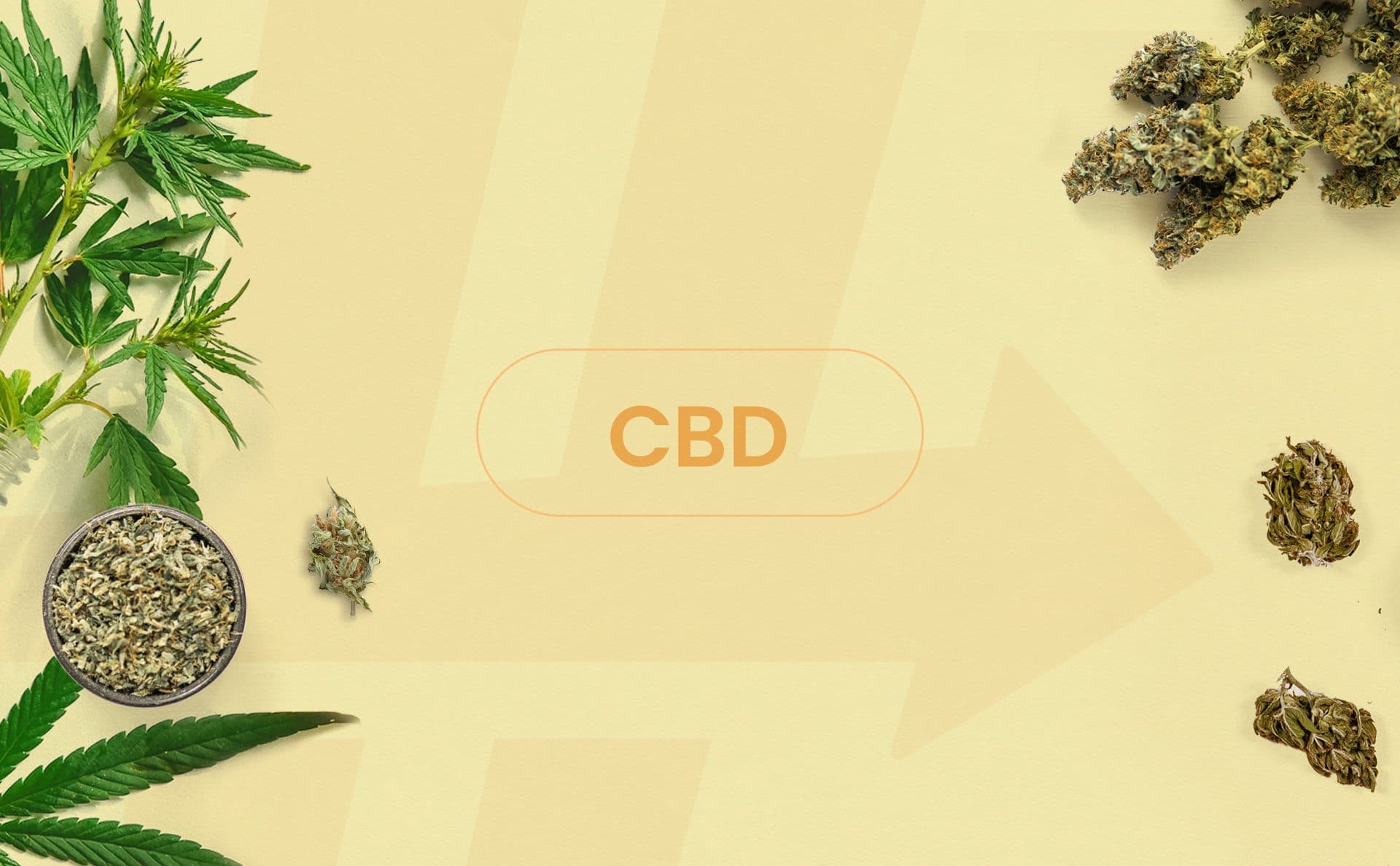
The main non-intoxicating ingredient in cannabis is called CBD, or. CBD is also the most studied of all cannabinoids. Because it is non-impairing, CBD is non-addictive and is even anti-addictive for many substances. It is widely-recognized as generally safe and well-tolerated, with few mild to moderate side effects.
Uniquely, CBD stands out as the only natural cannabinoid to earn FDA approval in the form of pharmaceutical Epidiolex®. This is a prescription, isolated form of high-dose CBD proven effective for treating certain rare childhood epilepsies in children ages 1 year and up.
By contrast, the second most-studied is THC or delta-9-tetrahydrocannabinol. THC is responsible for causing a high that limits its therapeutic window in dosing and narrows its consumer base to adults only.
Here’s what you need to know about the cannabinoid CBD.
Cannabidiol, which is most commonly referred to as CBD, is the most prevalent cannabinoid compound found in fiber-type cannabis, also called hemp. CBD actually exists first as its parent, CBDA (cannabidiolic acid), before harvesting and processing. Even though THC might be more widely known, CBD was discovered 20 years before THC, during the 1940s.
Recently, CBD has become widely popular as a natural treatment for a multitude of conditions. CBD can be derived abundantly from hemp and less from drug-type cannabis (more than 0.3% THC).
Hemp-derived CBD is technically legal, and may still contain trace amounts of THC (less than 0.3%). CBD that comes from whole-plant cannabis tends to contain more cannabinoids, terpenes, and naturally-occurring, synergistic components.
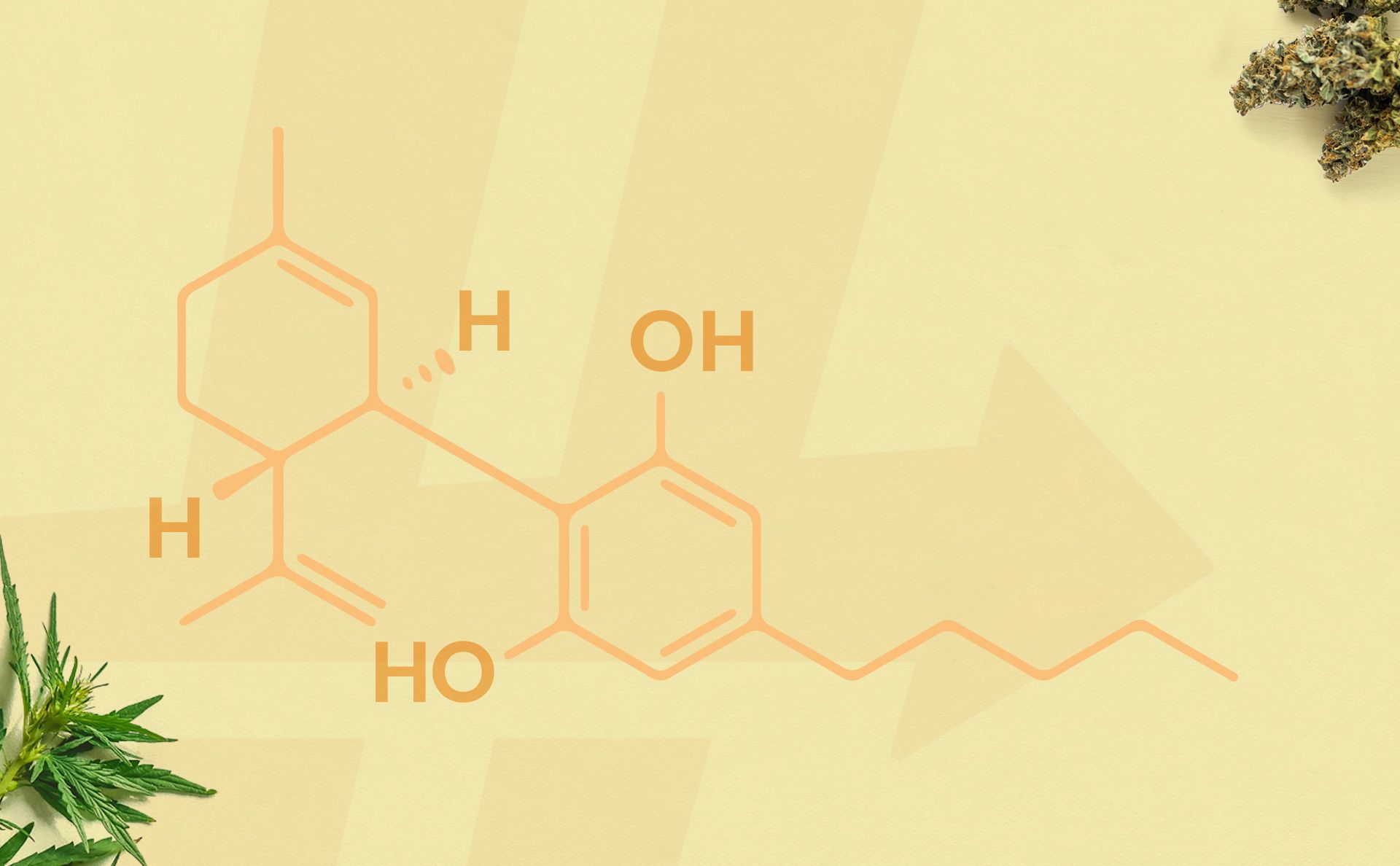
CBD is a proven safe and potentially beneficial substance that can be consumed with few, if any, serious side effects. These statements are made by The World Health Organization (WHO) about CBD around the time the cannabinoid first started gaining popularity circa 2018, as a result of the Farm Bill. This bill effectively legalized all hemp-derived cannabidiol products, as long as they remain under 0.3% Delta-9 THC by dry weight.
Contrary to popular belief, CBD indirectly impacts our endocannabinoid system (ECS). Unlike THC, which hits cannabinoid receptors CB1 and CB2. This is why CBD doesn’t get you high, and can even reduce the high and anxiety from THC.
Instead, CBD can increase endocannabinoid and their baseline tone. It also has over 65 other molecular targets in the body to exude its effects. These wide and far-reaching actions are what make us feel better with CBD in so many ways.
The ECS is a system in the human body that plays a critical role in maintaining homeostasis. Researchers are still gathering information to help us better understand the ins and outs of the complexities of the ECS. They do know that it is associated with processes including pain, memory, appetite, energy, sleep, mood, and many other aspects of our daily lives.
What the expert says...
"CBD may be used safely day or night to stay productive while relieving common symptoms. It may also help counteract the psychotropic effects of THC and may work to negate unwanted, negative feelings of THC, such as paranoia and increased anxiety."
England-based GW Pharmaceuticals conducted important and rigorous clinical efficacy studies with specific pediatric epilepsy populations. GW Pharmaceuticals manufactures a pharmaceutical-grade CBD oil that is branded as Epidiolex. This CBD isolate oil is the first cannabis-derived prescription drug to be approved by the US Food and Drug Administration (FDA).
This may be safely prescribed in children 1 year and older with Dravet syndrome, Lennox-Gastaut syndrome, and tuberous sclerosis complex – all of which cause debilitating seizures that are difficult to treat with traditional medications.
By now, there are several human studies to show clear efficacy of CBD for treating certain pediatric childhood epilepsies. However, it is not yet known how well over-the-counter (OTC) preparations of CBD compare given differences in dosing, quality of manufacturing, and production. Therefore, more clinical studies for CBD and other conditions are still needed, especially using non-pharmaceutical and whole-plant formulations.
When people think of the effects of CBD, they often confuse them with THC. THC is the main psychoactive cannabinoid found in cannabis, and CBD is the main non-impairing cannabinoid. This means that the effects of CBD products will not produce a “high” in typical doses of hemp products.
CBD is attractive for many cannabis consumers because it is thought to deliver many of the potential benefits without the impairment that comes with ingesting THC. Additionally, CBD may help to counteract the psychotropic effects of THC, and works to negate unwanted, negative feelings such as paranoia and increased anxiety.
CBD is best described as “non-impairing”, rather than “non-psychoactive”. A necessary distinction because it still has a subtle influence on your mood and well-being, but without affecting your thinking or memory.
People also wonder about potential side effects, which are most often mild-moderate, dose-dependent, and may include:
If you are on anticonvulsant medications, then your provider will need to monitor your liver enzymes because CBD may increase them. Particularly when you take clobazam or valproic acid and CBD at the same time; the doses may need adjusting. These possible increases in liver enzymes may be considered serious, but reversible.
Drug interactions with CBD besides anticonvulsants and blood thinners have not yet shown documented serious interactions. However, it is always best to speak to your healthcare provider first before taking CBD or other cannabis products for any reason.
The benefits of CBD and THC are often similar and are used to treat many of the same ailments. They are frequently combined for greater effectiveness in conditions like insomnia, pain, and muscle spasms.
However, what works for one consumer might not work for the other, and the feelings we get from cannabinoids also have much to do with what is going on in our lives on a particular day. The same is true for CBD benefits and CBD effects.
A perhaps underreported CBD benefit is its ability to produce a profoundly healing effect on the consumer. And while the effects of CBD won’t make the consumer feel high, if they are inexperienced with cannabinoids, their sense of relief may feel like nothing they’ve ever experienced.
CBD products are suggested to have many potential therapeutic properties, and often consumed to help alleviate symptoms associated with conditions such as:
When deciding which CBD products to consume, from hemp or cannabis, it is also important to consider its legality. Cannabis plants and products with more than 0.3% THC are included in the U.S. Controlled Substances Act, which means that they are currently prohibited under federal law. To get around this, most states have enacted programs that allow medical cannabis and products to be prescribed by a doctor.
Although CBD products from hemp are legal in most states, the specifics of the legality of any THC or CBD product can vary from state to state. Be sure to check the legal status of any CBD products you take before ingesting them. Our Cannabis Industry Guide contains valuable state-based information on CBD, THC, and other cannabinoids.
This is one of the consumers' most common questions before taking any CBD products. THC will be detected in the urine by most standard drug tests. CBD may be detectable, depending on the drug test you take, but many drug tests are not designed to look for cannabidiol, because it is non-intoxicating.
Be sure to keep in mind that although legal, many CBD products do contain trace amounts of THC. While these amounts are small, they may still be detectable in a drug test, especially if you take CBD products regularly or are ingesting large quantities of CBD.
This can also happen if the products you are consuming contain more THC than the packaging label claims, which is always a possibility. For example, new research has found that up to more than half of CBD products are mislabeled and may contain more THC than the labels claim.
The future is bright when it comes to cannabinoid research, and CBD is leading the way. All the cannabinoids mentioned in this guide are of importance. But a better understanding of all things CBD could hold the key to further acceptance, normalization, and much-needed unbiased research of cannabis plant medicine.
Here’s what we learned about CBD:
Ready to learn about some lesser-known cannabinoids? Answer the question below and keep gaining that knowledge.
THC was discovered before CBD.

Dr. Abraham Benavides
Dr. Abraham Benavides is an internationally-recognized cannabis research expert, experienced medical advisor, and full-tuition merit scholar of the George Washington University School of Medicine and Health Sciences. Dr. Abe enjoys helping patients as a writer, educator, and cannabis health coach at the GW Center for Integrative Medicine.