Cart

Your cart is empty.
Explore your product matches or browse a nearby dispensary to find something that’s right for you.
0 of 6 strains
No cultivars to compare. Add some from the cultivar cards!
Create a free account to rate and review strains.
Explore your product matches or browse a nearby dispensary to find something that’s right for you.
Cannabis use is increasingly recognized for its therapeutic benefits, from alleviating pain to reducing anxiety. However, like any substance, cannabis can also lead to dependency for some consumers. This chapter explores the nuanced relationship between cannabis and addiction, diving into what cannabis addiction, or cannabis use disorder (CUD), looks like, who may be more susceptible due to genetic and environmental factors, and how it can affect young, developing brains. Whether you’re a patient, provider, or curious consumer, this guide offers insights to help you make informed choices and cultivate a balanced, mindful relationship with cannabis.
Chapter 4 · 7 min read
As cannabis becomes more widely accessible, understanding its potential for addiction is essential for consumers, healthcare providers, and society. This chapter explores what cannabis addiction looks like, the factors that contribute to it, and the steps individuals can take if their cannabis use becomes problematic. From the genetic underpinnings of addiction to its effects on developing brains, this resource aims to provide a comprehensive look at cannabis use disorder (CUD) and its broader implications.
Cannabis use disorder (CUD), commonly referred to as cannabis addiction, involves a spectrum of behaviors, from habitual use to dependency, where consumption interferes with daily life. Although cannabis addiction is often seen as less intense than dependence on substances like alcohol or opioids, it can still deeply affect a person’s quality of life, impacting daily routines, personal relationships, and mental well-being. According to the National Institute on Drug Abuse (NIDA), approximately 30% of people who use cannabis may experience some level of CUD, with symptoms including a strong desire to consume, increased tolerance, and continued use despite negative consequences (NIDA, 2022).
Unlike substances that often have life-threatening withdrawal syndromes, cannabis addiction tends to present milder, though still impactful, symptoms. These may include mood changes, irritability, and cravings. While many consumers can start and stop cannabis use without difficulty, for some, regular use can lead to dependency, characterized by compulsive behavior and interference with personal and professional responsibilities.
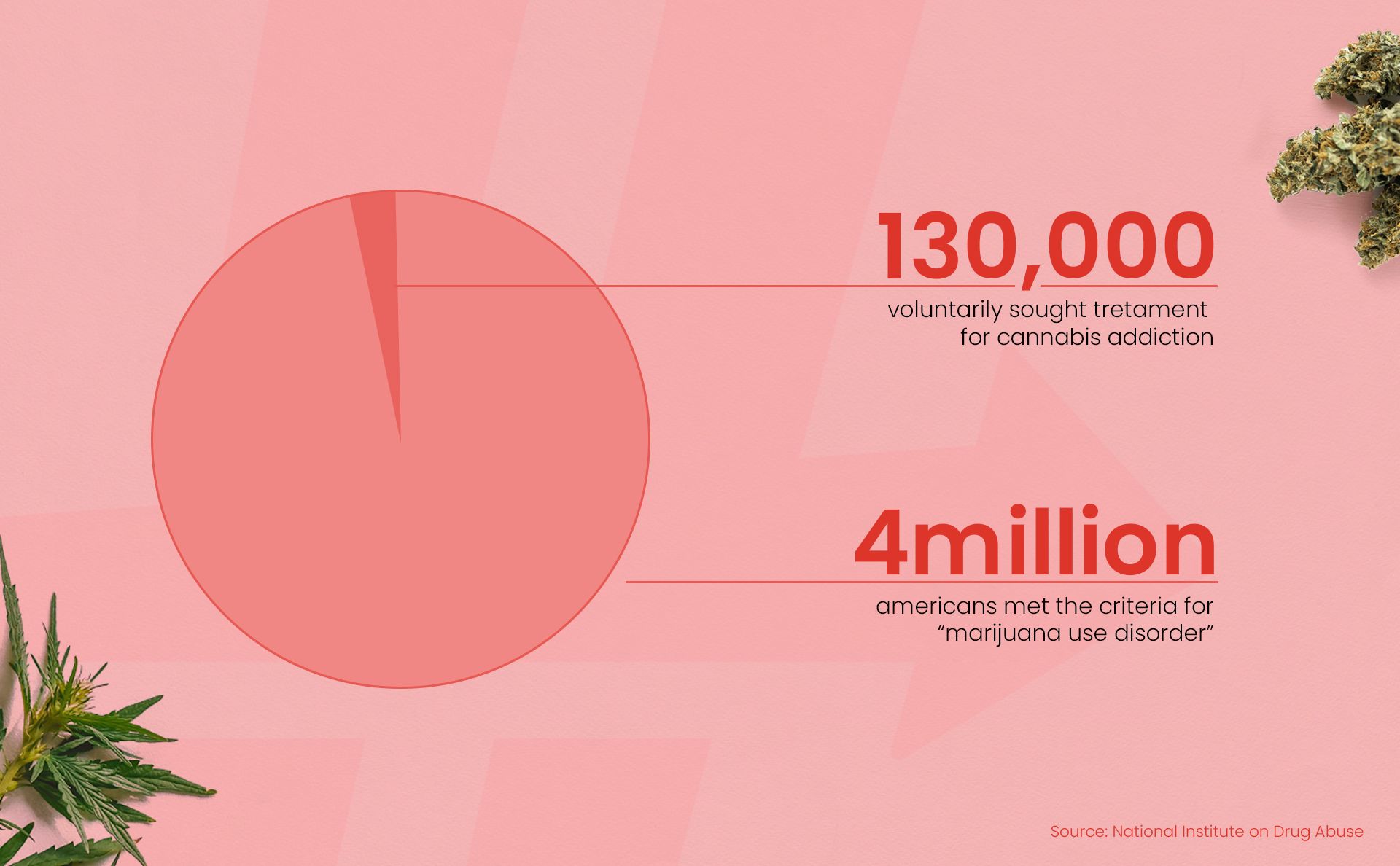
The 2015 data from the National Institute on Drug Abuse (NIDA) revealed that around 4 million Americans met the criteria for CUD, though the validity of these figures is debated. Legal consequences for cannabis possession and mandatory treatment for “marijuana use disorder” following arrests have likely skewed these numbers, leading some to question the accuracy of the statistics. It’s also worth noting that the percentage of consumers who seek treatment remains relatively low, with just 130,000 individuals voluntarily undergoing treatment for CUD. This indicates that while some individuals may struggle with cannabis use, most consumers do not experience severe dependency (National Institute on Drug Abuse, 2015).

What the expert says...
"For consumers, remember that each person’s relationship with the cannabis plant is unique. If you’re exploring cannabis for therapeutic benefits, consider starting with low doses and gradually adjusting based on your needs."
Research indicates that genetics may influence a person’s likelihood of developing cannabis addiction. Heritability estimates for cannabis use disorder (CUD) range from 30% to 59%, with certain genetic markers linked to both cannabis use and other mental health conditions. For example, the CNR1 gene, which produces the CB1 receptor that interacts with THC, has been associated with cannabis dependency, suggesting some individuals may have a genetic predisposition. Other genes, like INTS7 and CSMD1, have also been identified in studies as potentially affecting cannabis use behaviors.
Twin studies, particularly those involving identical twins raised in different environments, have offered key insights into how both genetics and environment contribute to cannabis addiction. Identical twins, who share the same genetic makeup, are more likely to both develop cannabis use disorder (CUD) than fraternal twins, underscoring a strong hereditary component. However, genetic predisposition alone doesn’t determine addiction risk. Environmental influences, such as family dynamics, social circles, and personal experiences, also significantly shape the likelihood of developing CUD. This interplay between genetics and environment suggests that while some individuals may be more genetically susceptible, factors like lifestyle and personal choices are equally crucial in understanding addiction risk.
While outdated claims that cannabis use lowers IQ have been debunked, research still suggests that regular use during adolescence—when the brain is still developing—can have lasting cognitive effects. For an in-depth look at this information, be sure to read our Cannabis Industry Guide.
Pediatricians and other medical experts agree that cannabis can affect areas of the brain related to memory, attention, and learning, especially in individuals under the age of 25 (Yale Medicine, 2022). The prefrontal cortex, which plays a crucial role in decision-making and impulse control, is particularly vulnerable during these years, and frequent cannabis use in young people may increase the risk of dependency and other mental health challenges later in life (WebMD, 2022).
A study on twins highlighted that environmental factors, such as family and social support, can modulate genetic predispositions to addiction. However, even with support, cannabis use during adolescence carries risks. Adolescents are more susceptible to developing CUD than adults due to the influence of cannabis on the developing brain (Yale Medicine, 2022).
Cannabis addiction presents a range of behavioral, psychological, and physical symptoms. Key indicators include:
For individuals concerned about their cannabis use, these symptoms provide a starting point to assess whether consumption has become problematic.
While CUD can be challenging, various treatment options exist to help individuals regain control over their cannabis use. Cognitive-behavioral therapy (CBT) has been effective in treating CUD by addressing underlying behaviors and thought patterns that drive addiction. Other therapeutic options include motivational enhancement therapy (MET) and contingency management, which reinforces positive behaviors through reward systems (National Institute on Drug Abuse, 2022).
Outpatient services offer a flexible approach to treatment, allowing individuals to continue their daily routines while receiving support. For those who prefer not to involve medical intervention, support groups like Marijuana Anonymous offer peer support and coping strategies. Regardless of the approach, recognizing the issue and seeking help is a crucial first step toward recovery.
Cannabis use is often associated with other substance use and mental health conditions. Studies have shown genetic correlations between CUD and disorders like ADHD, schizophrenia, and depression, indicating shared genetic factors (Demontis et al., 2019; Hillmer et al., 2021). Individuals with CUD are also more likely to engage in nicotine and alcohol use, suggesting that CUD may be part of a broader pattern of substance use disorders (Pasman et al., 2018).
Awareness of co-occurring conditions is essential in treating CUD effectively, as these conditions often require comprehensive care. Addressing both cannabis use and any underlying mental health issues can improve outcomes for those seeking recovery.
Cannabis addiction, while generally less severe than other substance dependencies, remains a genuine concern for some consumers. Yet, research has shown that cannabis also offers a range of therapeutic benefits, from pain relief to anxiety reduction, and can be a powerful tool in managing various health conditions. By understanding the nuanced factors at play—such as genetic predispositions, developmental impacts on young brains, and co-occurring conditions—individuals can make informed, mindful choices about cannabis use that maximize its benefits while minimizing risks. For those who find themselves struggling, early support can help manage cannabis use disorder (CUD), encouraging a balanced and healthy relationship with this versatile plant. Educating ourselves on these aspects empowers us to enjoy cannabis thoughtfully and responsibly, embracing its potential while being aware of its complexities.
Ready to dive deeper into our Cannabis and the Body Guide? Up next, we’re uncovering what withdrawal from cannabis looks like. Answer the question below to keep learning.
Which age group is more susceptible to the cognitive effects of cannabis use?

Dr. Chloe Givens
Dr. Chloe Anastasia Givens is an integrative health pharmacist and educator with a deep commitment to advancing health literacy and cannabis education. With a Doctor of Pharmacy degree and years of experience in both traditional and plant-based medicine, Dr. Givens is passionate about helping patients and healthcare professionals understand the science and therapeutic potential of medicinal plants, including cannabis. Through her work, she strives to bridge the gap between conventional and integrative health practices, offering evidence-based insights that empower informed decisions. Dr. Givens contributes her expertise in cannabis science as both a writer and a medical advisor for the HashDash platform.