Cart
Your cart is empty.
Explore your product matches or browse a nearby dispensary to find something that’s right for you.
0 of 6 strains
No cultivars to compare. Add some from the cultivar cards!
Create a free account to rate and review strains.
Explore your product matches or browse a nearby dispensary to find something that’s right for you.
What are Cannabinoid receptors, and what role do they play in our bodies? This chapter discusses these important brain functions and more.
Chapter 2 · 3 min read
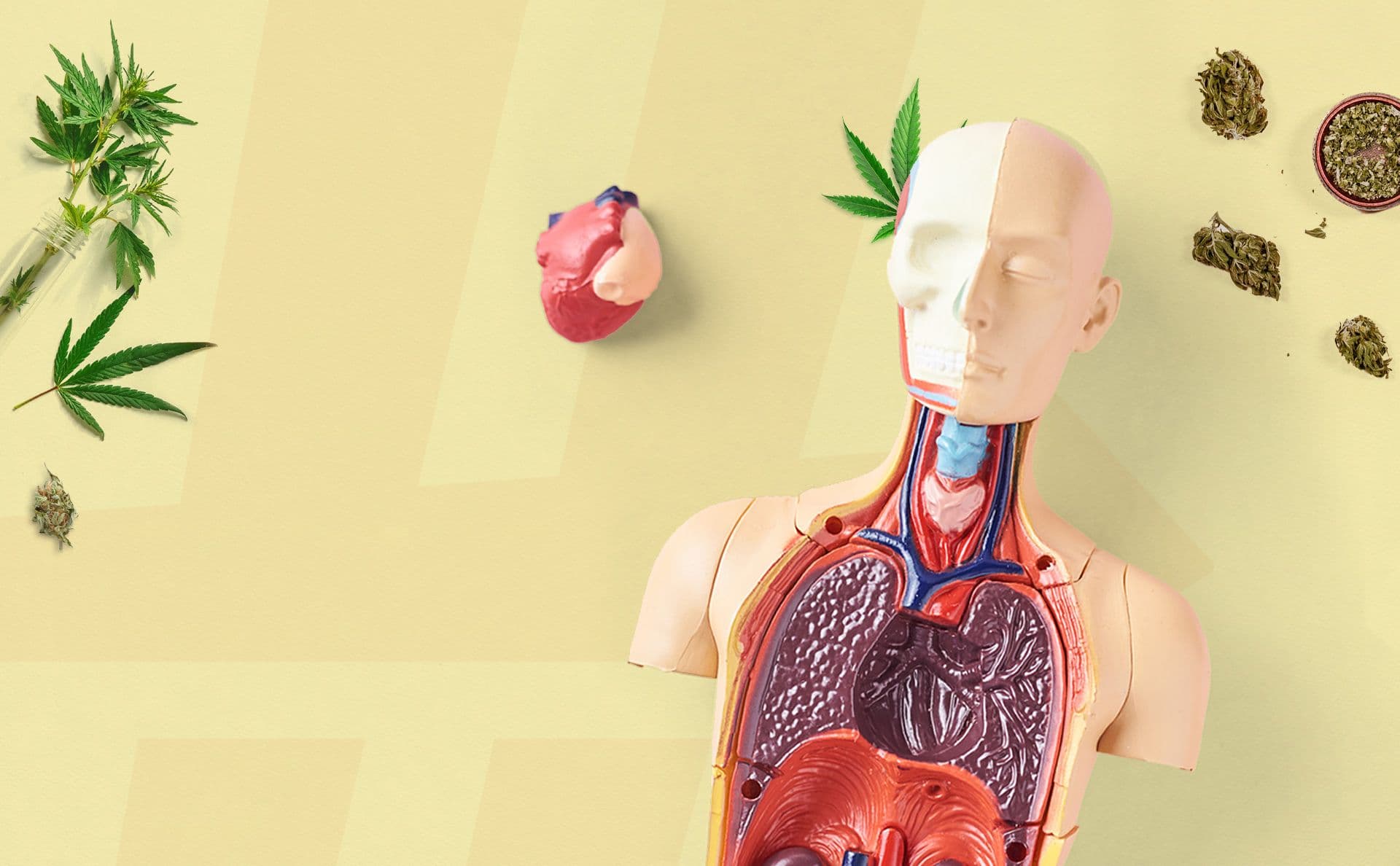
Cannabinoid receptors are present in mammals, birds, reptiles, and fish. As such, much speculation has been made about how important these parts of the brain are. Here, we give an easy-to-understand overview of these receptors and the systems in which they impact.
Before we dive deeply into the important question of what cannabinoid receptors are, we must first explain what the endocannabinoid system (ECS) is. The endocannabinoid system is the largest neurotransmitter system in the body that controls the release of all other neurotransmitters and hormones in the body like a fine-tune dial on a radio. It’s present throughout the body, and responsible for regulating every physiological process in the body except for breathing.
This system was discovered about 30 years ago by scientific researchers led by Dr. Raphael Mechoulam who were studying the cannabinoid THC. Even though there has been some research conducted on it, we don’t fully understand the ECS quite yet.
Even in those of us who don’t consume cannabis, the ECS is ever-present. The ECS is found in all species with a skeleton. There are some people who believe the cannabis plant has a spiritual link to us and was created for us, but in reality, cannabinoids in plants, aka phytocannabinoids, were created as poisons to keep insects and animals from eating them. At any rate, experts are still learning about the ECS, the metaphysical purpose of the cannabis plant, and how our lives could improve with an optimized ECS.
Now that we have a better understanding of the bodily system that cannabinoid receptors interact with, we can further explain what they are. Put simply, cannabinoid receptors are G-coupled cell membrane receptors. They are not only found within the ECS but they are also found throughout the human body.
As far as the science currently states, the human body contains two main types of cannabinoid receptors: CB1 and CB2. CB1 receptors are located in the peripheral nervous system and the brain, and CB2 receptors are most commonly found within the immune system and as well as in the brain but at much lower levels than CB1. Some cannabinoids, like cannabigerol (CBG) for example, work by binding to both CB1 and CB2 receptors. Others work by binding only one receptor, or even binding to one and blocking another!
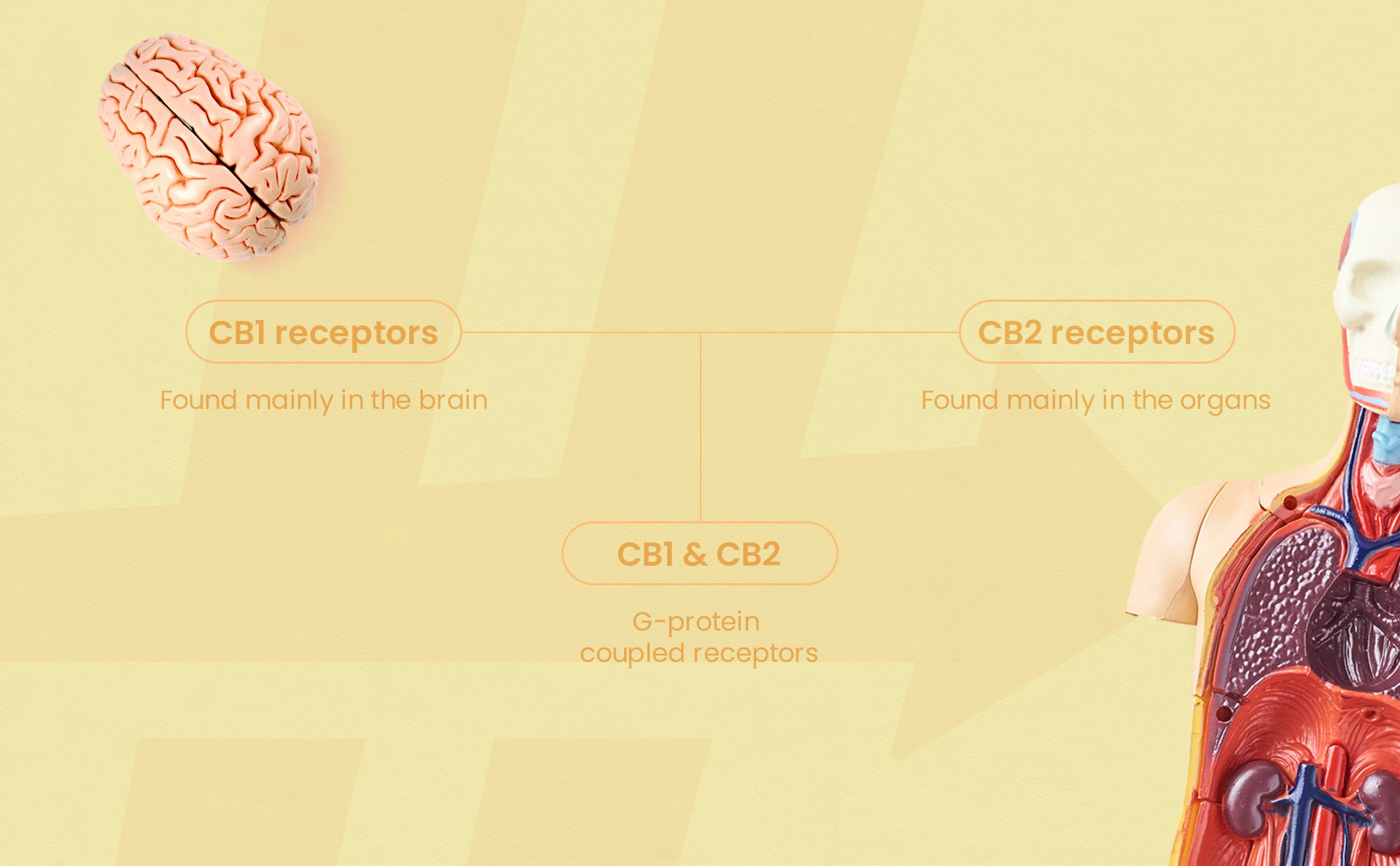
Each cannabinoid can also bind strongly or weakly to each receptor, which changes the neurotransmitter or hormone release that cell is responsible for, and ultimately, a physiological process like hunger or memory. You can see that the endocannabinoid system can get very complicated, and talking about each receptor is its own mini-course.

What the expert says...
"Cannabinoid receptors are found in a neurotransmitter system in the body called the ECS, which was discovered about 30 years ago by scientific researchers led by Dr. Raphael Mechoulam who were studying THC."
There are three key components of the ECS: cannabinoid receptors, endocannabinoids, and enzymes. Receptors are found on the surface of cells in the body. Endocannabinoids like anandamide are microscopic molecules that stimulate these receptors, and enzymes like fatty acid amide hydrolase (FAAH) break down and inactivate endocannabinoids regardless of whether the body uses them.
As previously mentioned, there are two main types of cannabinoid receptors throughout the body: CB1 and CB2. In the brain, CB1 receptors are some of the most abundant receptors. These are the receptors that make us feel euphoria and or intense feelings of relief. These feelings of euphoria or pain relief are more intense when a cannabinoid like THC strongly binds and activates the CB1 receptor versus a weak feeling of relaxation felt when an endocannabinoid like anandamide weakly binds to the CB1 receptor.
CB2 receptors are mainly found existing outside of the nervous system, in other areas such as the immune system. Just like there are over 110 cannabinoids that we still need to study, there are other cannabinoid receptors in the body. At this time, CB1 and CB2 are the best-studied receptors because they were discovered first. This is also true for THC and CBD.
Natural balance is usually referred to as homeostasis, and all living things seek to maintain that balance. Staying close to our comfort zone is linked to the ECS: giving us the desire to keep cool in the summer, warm in the winter, eat when we are hungry, sleep when we’re tired, and so on. Here's what we learned about Cannabinoid Receptors:
We have much to learn to fully understand and harness the power of the ECS and its cannabinoid receptors. With so much advancement and evolution in cannabis, the future is bright for a better understanding of cannabis medicine and how this one-of-a-kind plant may interact with our bodies unlike anything else in the world.
Ready to learn more about individual cannabinoids? Answer the below question and keep absorbing this important info.
CB1 receptors are located in which parts of the body?
Dr. Michele Ross
Dr. Michele Ross is a serial entrepreneur and the founder of Infused Partners, a digital health consulting firm and plant medicine incubator. She has served on the medical advisory boards of many companies in the cannabis and wellness spaces and holds a PhD in Neuroscience as well as an Executive MBA.
She has authored 5 books including Kratom Is Medicine, Vitamin Weed, CBD Oil For Health, and Train Your Brain To Get Thin. As both a patient with chronic illness and a clinician, she has advocated for drug policy reform for over a decade. She founded the first 501c3 nonprofit research institute on cannabis and women's health. Dr. Ross was a founding member of the team that decriminalized psilocybin mushrooms in Denver, the first city in the US to do so. She is also a psychedelic guide and integration coach.
Dr. Ross is known for breaking boundaries as the first scientist to star on a reality television series in the world, finishing 4th place on the hit CBS series Big Brother 11. She has been featured on the Today Show, The Doctors, Vice, and many other media outlets, and now lives in Las Vegas.