Cart

Your cart is empty.
Explore your product matches or browse a nearby dispensary to find something that’s right for you.
0 of 6 strains
No cultivars to compare. Add some from the cultivar cards!
Create a free account to rate and review strains.
Explore your product matches or browse a nearby dispensary to find something that’s right for you.
The endocannabinoid system (ECS) is a common thread among humans and animals, allowing self-regulation of important functions. Its existence in the body predates the evolution of Cannabis itself, which humans have been taking full advantage of for a plethora of therapeutic purposes across millennia.
Chapter 1 · 4 min read
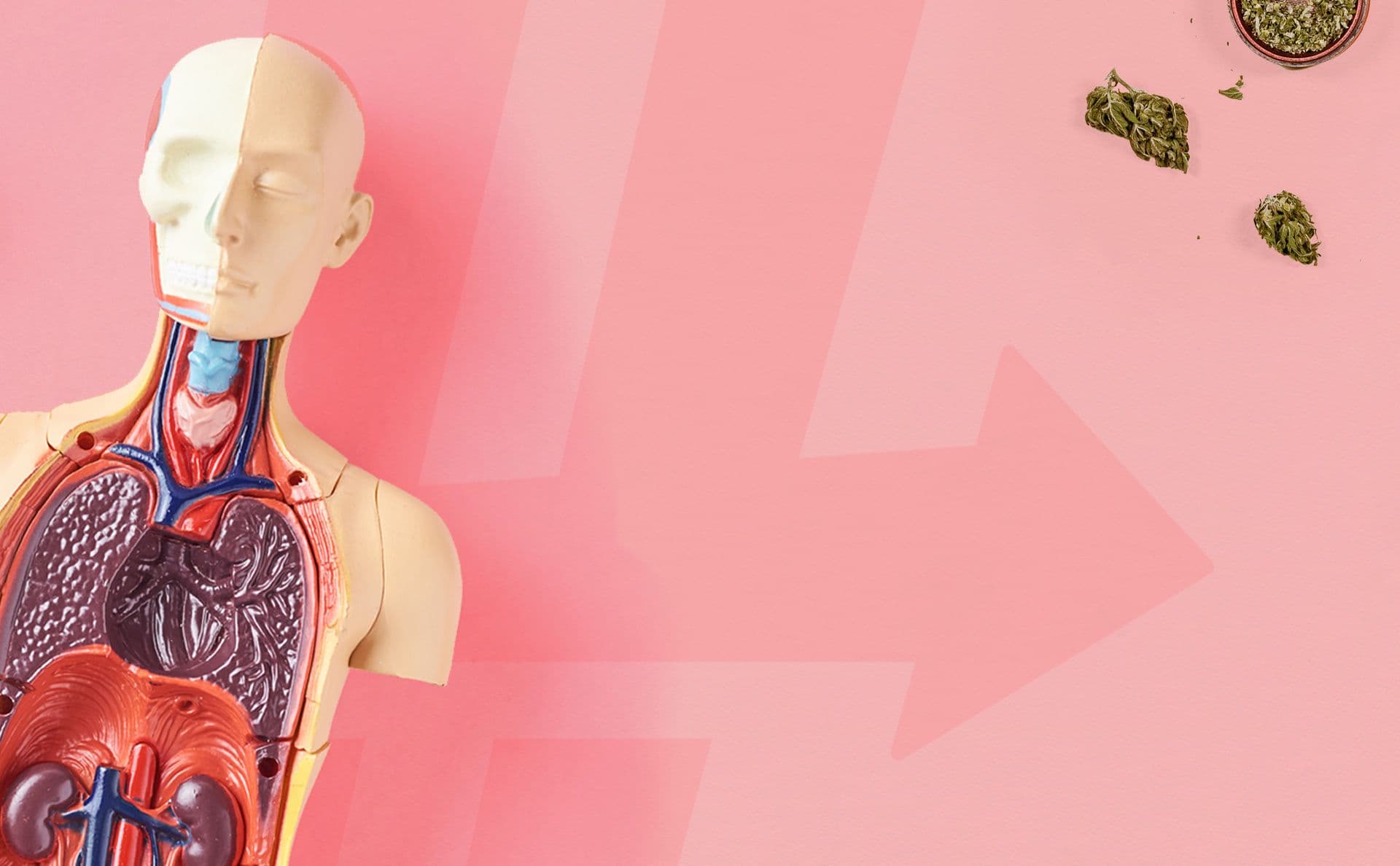
Cannabinoids interact with the endocannabinoid system (ECS), a complex system that signals cells in the human body and is existent in almost all animals – from primitive to complex. This system was discovered about 30 years ago, by scientific researchers who were studying THC and wanted to know what makes it tick. Even though there has been some research conducted on it, we don’t fully understand the ECS to its full potential quite yet.
Cannabinoid receptors are cell membrane receptors found throughout the human body and are a part of the endocannabinoid system. The endocannabinoid system is responsible for regulating our appetite, mood, metabolism, pain, and even memory.
It is for these reasons that many cannabis advocates, activists, and consumers believe that the cannabis plant is directly linked to human evolution in some capacity. This is yet another speculation that isn’t rooted in much data, and the research on it is still in its early stages.
Indeed, humans have domesticated and cultivated cannabis for industrial, agricultural, and therapeutic purposes for over 12,000 years. Currently, evidence shows us that the ECS evolved in animals over 500 million–1 billion years ago – well before Cannabis did, about 30 million years ago.
Even for those of us who don’t consume cannabis, the ECS is ever-present and vital to our well-being. The ECS is found in nearly all species, with and without vertebrae. This has led to much musing and speculation whether the cannabis plant is intrinsically linked to humans.
The ECS plays a vital role in a wide array of bodily functions and processes. These include regulating appetite, and circadian rhythms that help you keep your sleep schedule, memory, reproductive system, and fertility, as well as mood.
Cannabis makes you hungry, can help you sleep, can help relieve pain, nausea, anxiety, and puts you in a good mood. For these reasons, cannabis has been recommended for patients with cancer and chronic pain for millennia to help them find relief.
We still have much to learn about the ECS, but preliminary science does suggest that an imbalanced or disrupted ECS can lead to ailments like depression, sleeplessness, weight gain or loss, and so on. This idea is called clinical endocannabinoid deficiency, and may underlie diseases not yet explained by Western medicine such as fibromyalgia, irritable bowel syndrome, migraines, neurological conditions, and more.
Plant-based cannabinoids can trigger the same endocannabinoid (CB) receptors to produce therapeutic effects. Beyond that, they have dozens of non-CB targets in the rest of the body that may provide further therapeutic effects. This concept of an expanded target set beyond the ECS is also called the endocannabinoidome (eCBome), and may also help regulate the gut-brain-axis and lipidome.
What the expert says...
"The endocannabinoid system is present in all of us. Cannabis gives us numerous ways to interact with and use it to our full advantage."
Natural balance is usually referred to as homeostasis, and all living things seek to maintain that balance. Staying close to our comfort zone is linked to the ECS: giving us the desire to keep cool in the summer, warm in the winter, eat when we are hungry, sleep when we’re tired, and so on.
In humans, we know there are three basic parts of the ECS:
Cannabinoid receptors are found on the surface of cells in the body. Endocannabinoids are microscopic molecules that stimulate these receptors, and enzymes make and break down endocannabinoids when the body uses them.
There are two main types of cannabinoid receptors throughout the body: CB1 and CB2. In the brain, CB1 receptors are some of the most abundant receptors – mostly in the brain. CB1 is what makes us feel high, but pretty much only responds to THC-like compounds and not CBD, CBG, their acidic parents, nor most of the minor cannabinoids.
CB2 receptors are mainly found existing outside the nervous system, in other areas such as the immune system. Just like there are over 120 cannabinoids that we still need to study, there are other cannabinoid-sensitive receptors in the body that need more understanding.
At this time, CB1 and CB2 are the best-studied receptors because they were discovered first. This is largely true for THC and CBD. Our chapter Cannabinoid Receptors covers the ECS in more depth, so be sure to check that out.
Non-impairing cannabinoids like CBD, CBG, and more can have indirect influence through ECS enzymes. By slowing down ECS enzymes, they can increase levels of endocannabinoids that mediate self-regulation.
Cannabinoids like CBD can also activate over 65 molecular targets in the body that are involved in things like mood, pain, inflammation, and more. This expanded set of cannabinoid-sensitive targets that aren’t CB1 or CB2 receptors are part of what’s now called the endocannabinoidome.
Cannabinoids are as fascinating as they are complex. Here’s what we learned in this chapter:
What is the primary role of the endocannabinoid system (ECS) in the human body?
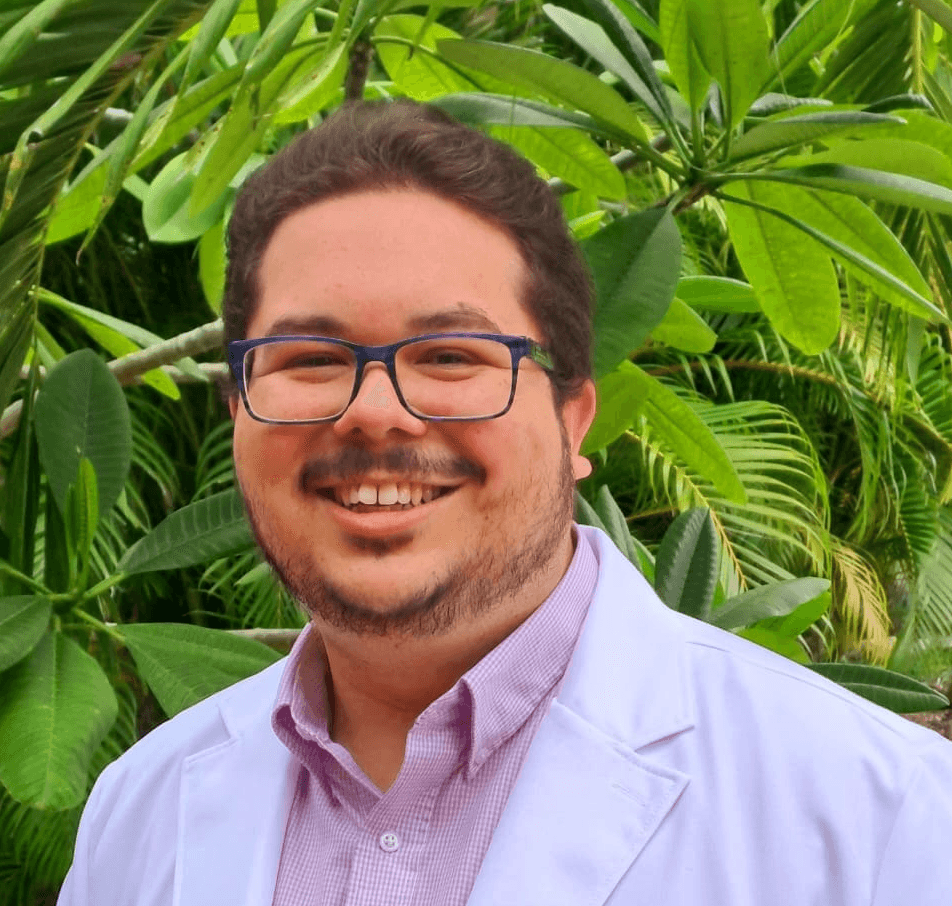
Dr. Abraham Benavides
Dr. Abraham Benavides is an internationally-recognized cannabis research expert, experienced medical advisor, and full-tuition merit scholar of the George Washington University School of Medicine and Health Sciences. Dr. Abe enjoys helping patients as a writer, educator, and cannabis health coach at the GW Center for Integrative Medicine.