What are Flavonoids?
What role do the compounds flavonoids play when it comes to cannabis? This chapter offers insight into the world of these 6000+ natural compounds.
Chapter 4 · 3 min read
While much of the focus on the taste and smell of cannabis surrounds terpenes, the compounds known as flavonoids play a large part in the plant's consumption. In this chapter, we discuss what flavonoids are, their role in the culinary and natural worlds, and so on.
What Are Flavonoids?
Flavonoids are secondary metabolites found in the plant world. These secondary metabolites are abundant in the human diet. With cannabis, flavonoids are often treated as an afterthought when describing the plant, especially when you hear the entourage effect being discussed.
Additionally, ever wonder where purple cultivars get their delightful hue? Cannaflavins. Cannaflavins are similar to terpenes in the way our senses perceive cannabis. However, flavonoids are more complex than simply smelling and tasting. Flavonoids are one of the most understudied and least understood aspects of the cannabis plant.
Flavonoids in Our Natural World and Cooking
There are over 6,000 different flavonoids in our natural world, occurring specifically in plants. There are 12 major subclasses of flavonoids, based on their chemical structure. Six of these twelve are significant for the human diet and could increase our knowledge of cannabis soon. Those six subclasses are anthocyanidins, flavan-3-ols, flavonols, flavones, flavanones, and isoflavones.
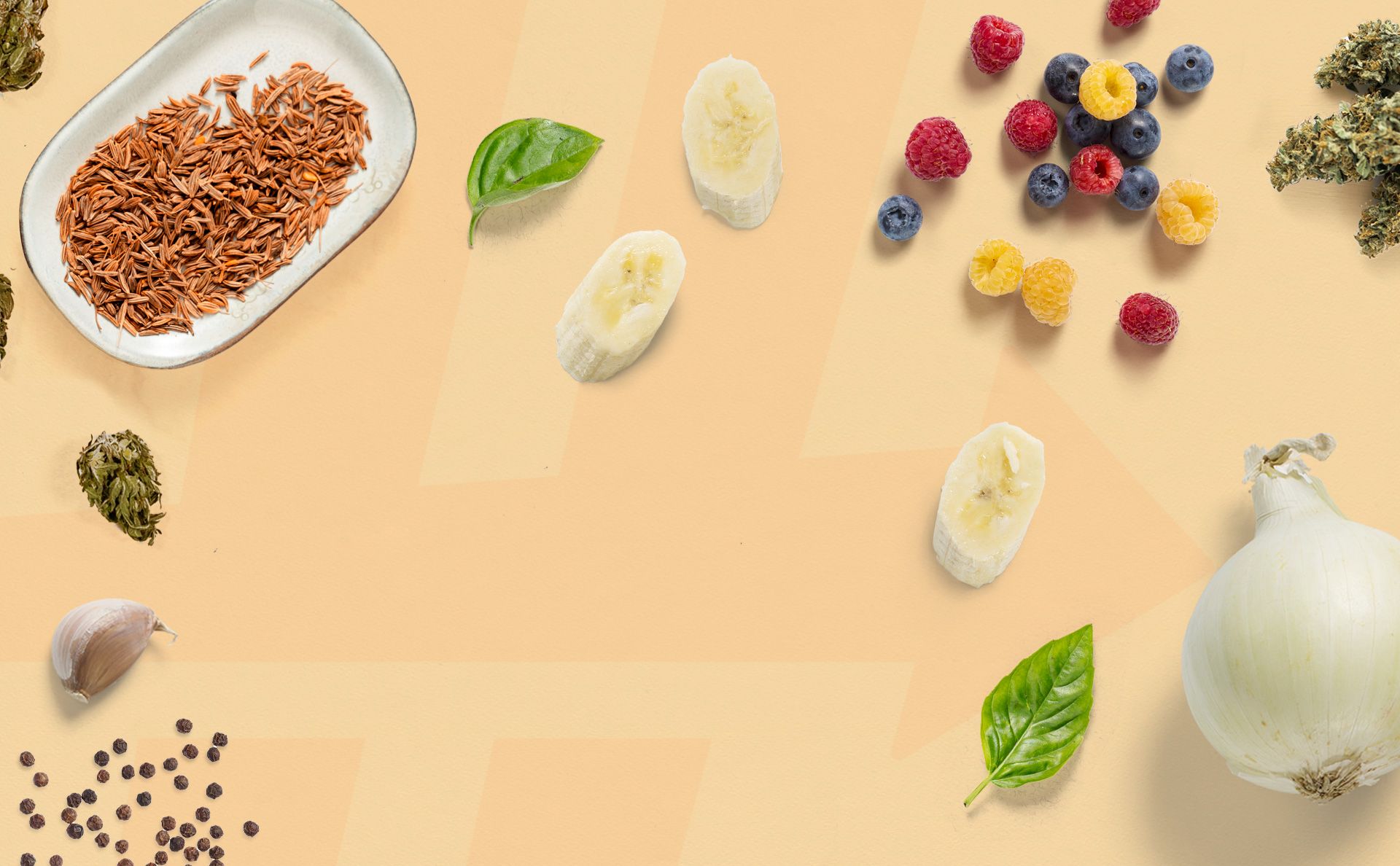
In culinary terms, flavonoids are highly concentrated in foods like onions, garlic, herbal teas, berries, bananas, and of course, a plethora of spices and herbs. For example, the subclass of flavonoids known as anthocyanidins can be found in abundance in blue, red, and purple berries, which is a popular flavor many cannabis consumers love. Much like their relative terpenes, flavonoids have the potential to help with chronic pain, act as inflammatory, and provide antimicrobial properties.
The Function of Flavonoids
Flavonoids are crucial to the reproduction and survival of plants. These essential chemicals are responsible for UV filtration, symbiotic nitrogen fixation, chemical messengers, physiological regulators, and cell cycle inhibitors.
There are around twenty varieties of flavonoids found in cannabis. Some of the most prominent flavonoids in cannabis include Βeta-Sitosterol, Kaempferol, Quercetin, Orientin, and Luteolin. As more states legalize cannabis and permit further studies and research into flavonoids, we may discover an untapped world of potential benefits from these little-known compounds.
The Future of Flavonoids Research
Perhaps the most understudied and least understood area of cannabis research, flavonoids are also one of the most interesting. When added to the entourage effect, the benefits of flavonoids go beyond giving cannabis its flavor. Flavonoids are just one area of cannabis in which more research needs to be conducted, so we can discover what, if any, their benefits are when consumed.
What We Learned: What are Flavonoids?
Flavonoids are one of the most understudied areas of cannabis. This chapter should help shine a light on this unlocked compounds that add complex flavors to your favorite cultivars. Here’s what we learned about Flavonoids:
- Flavonoids are secondary metabolites found in the plant world that are abundant in the human diet.
- Flavonoids are understudied and understood but could be important to the future of cannabis medicine.
- Cannaflavins are similar to terpenes in the way our senses perceive cannabis, and purple cultivars get their hue from them.
- There are over 6,000 different flavonoids in our natural world, occurring specifically in plants.
- There are 12 major subclasses of flavonoids, based on their chemical structure.
- Six subclasses of flavonoids could improve our knowledge of cannabis; including anthocyanidins, flavan-3-ols, flavonols, flavones, flavanones, and isoflavones.
- Flavonoids are highly concentrated in foods like onions, garlic, herbal teas, berries, bananas, and of course, spices and herbs.
- Flavonoids have the potential to help with chronic pain, act as inflammatory, and provide antimicrobial properties.
- Flavonoids are crucial to the reproduction and survival of plants and are responsible for many processes in plants.
Ready for another chapter in our Basics Guide? Answer the question below and keep learning!
Test your knowledge, track your progress and earn your badge.
How many major subclasses of flavonoids exist?