Cart

Your cart is empty.
Explore your product matches or browse a nearby dispensary to find something that’s right for you.
0 of 6 strains
No cultivars to compare. Add some from the cultivar cards!
Create a free account to rate and review strains.
Explore your product matches or browse a nearby dispensary to find something that’s right for you.
CBG is another “big four” cannabinoid to cover in our “Cannabinoids Guide”. Here, we explain what CBG is, its effects, and potential benefits.
Chapter 7 · 4 min read
Cannabigerol, abbreviated as CBG, is a major cannabinoid found in relatively smaller amounts than its cousins THC and CBD. Much like its cousin CBD, CBG has many potential therapeutic properties without the effects of feeling high like with THC. We will dive into those specific effects down below.
Currently, most CBG products are derived from legally grown hemp plants. CBG products commonly include sublingual oils, gummies, topicals, and so on to suit consumer preferences and needs. This legality is thanks to the passing of the 2018 Farm Bill, and along with it came an increased interest in other cannabinoids like CBG, and their potential benefits.
The amount of CBG you find in a cultivar depends on the cannabis chemotype. The prime example is type IV cannabis plants, which are defined by CBGA and CBG dominance.
Nowadays, type IV cannabis can be selectively bred to be up to 100% CBGA dominant. Type IV plants are also considered legal hemp because of its trace THC content, less than 0.3% by dry weight. However, you’re not likely to find this type of cannabis in dispensaries, which mainly carry type I products.
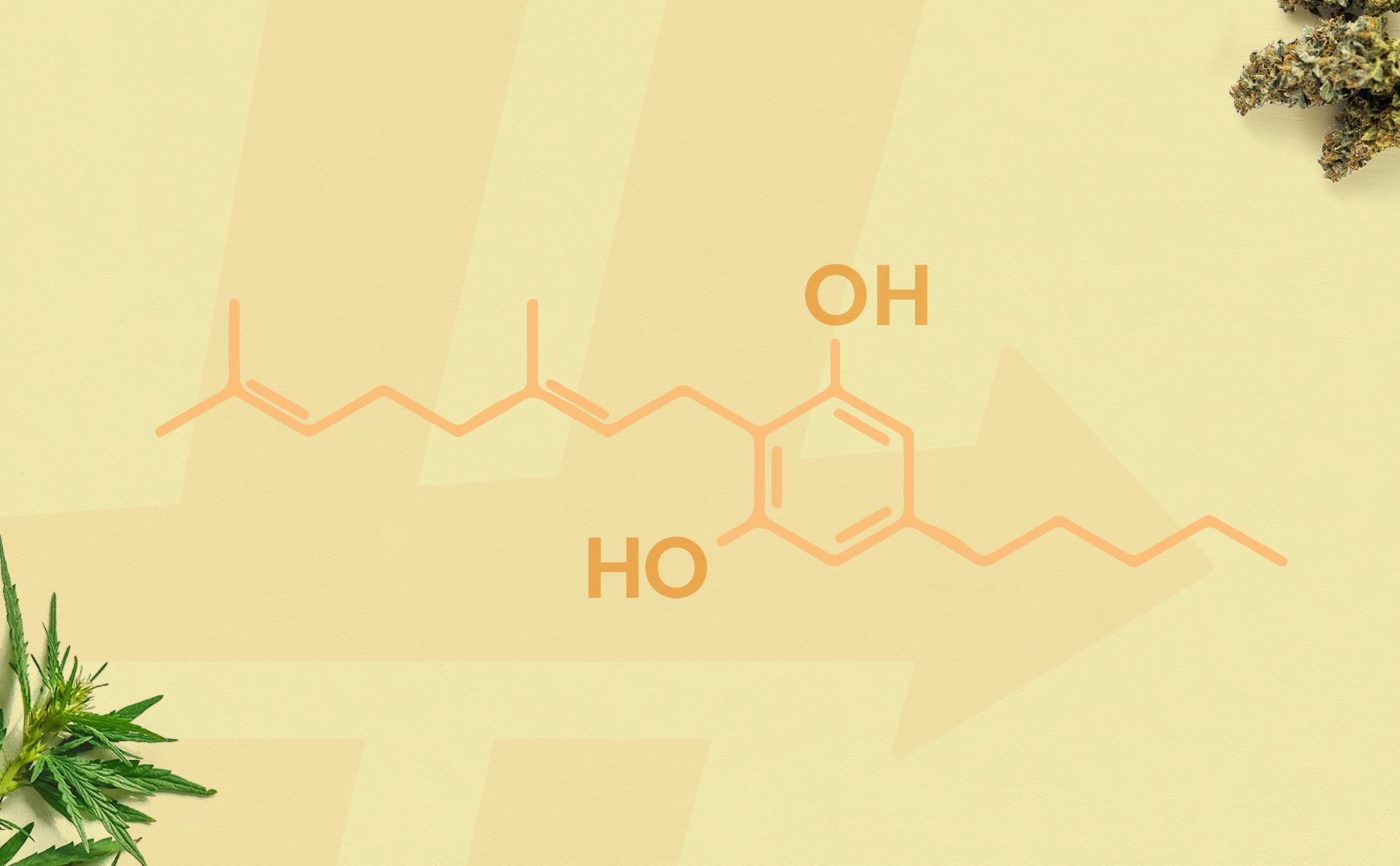
The other Cannabis chemotypes have far less CBG. Most will produce around or just over 1% CBG. This is because Cannabis plants choose early on which acidic cannabinoids they’ll favor and make more than the others (e.g., THCA-dominant in type 1, equal THCA and CBDA in type II, CBDA-dominant in type III, and CBGA-dominant in type IV).
Like the better-known and more abundant cannabinoid CBD, CBG is considered non-impairing. Unlike the famously intoxicating THC, CBG will not make most consumers feel high. That is, presuming your CBG product is of high-quality and not contaminated with excess THC.
While CBG doesn’t carry negative cognitive impacts, all the other self-reported side effects of CBG are actually similar to THC. These may include:

What the expert says...
"CBG content is just around 1 percent in most cultivars, unless specifically bred for and extracted into other products. However, legal hemp thrust CBG into the retail market, and many people self-report superior effectiveness over traditional medications."
While THC and CBD have thousands of supportive studies – including hundreds of clinical ones – CBG is one of the least clinically-studied cannabinoids. Early studies on CBG indicate that it has promising pain-relieving, neuroprotective, anti-inflammatory, and anticancer properties.
Practically speaking, there’s only one clinical study on CBG in the form of a survey of 127 participants. This first-of-its-kind CBG study by Dr. Russo and team demonstrates how real-world people are effectively self-medicating using CBG for a wide range of conditions. The most common reasons people use it for include:
Interestingly, the majority reported their conditions as “very much improved” or “much improved” by CBG. The vast majority also reported superiority of CBG over conventional medications including opioids, pain-relievers, antidepressants, and anti-anxiety drugs.
According to this survey, CBG may also be effective for cancer patients seeking natural alternatives to help with managing their chemotherapy side effects such as nausea, vomiting, and low appetite. It may also help ease digestive pains in patients with Crohn's Disease.
CBG products tend to be more expensive and rare than CBD and THC, but their availability overall is rapidly increasing. This makes research on major cannabinoids like CBG even more necessary, as the research catches up with retail use.
As is the case with so many other things cannabis-related, more clinical studies are essential to unlock the true potential of cannabinoids like CBG. Here’s what we learned about CBG:
Thankfully, we will see these scientific advancements occur as more legalization happens in states, hopefully at the federal level. The advancement and evolution of the cannabis industry and cannabinoid research is barely scratching the proverbial surface.
Answer the question below and keep diving deeper into the wonderful world of cannabinoids.
What are the potential benefits of CBG?

Dr. Abraham Benavides
Dr. Abraham Benavides is an internationally-recognized cannabis research expert, experienced medical advisor, and full-tuition merit scholar of the George Washington University School of Medicine and Health Sciences. Dr. Abe enjoys helping patients as a writer, educator, and cannabis health coach at the GW Center for Integrative Medicine.