Cart

Your cart is empty.
Explore your product matches or browse a nearby dispensary to find something that’s right for you.
0 of 6 strains
No cultivars to compare. Add some from the cultivar cards!
Create a free account to rate and review strains.
Explore your product matches or browse a nearby dispensary to find something that’s right for you.
What is CBL? In this chapter, we discuss this unknown minor cannabinoid, its effects, and whether it has any medical benefits.
Chapter 11 · 3 min read

CBL, or cannabicyclol, is an ultra-rare cannabinoid found in the cannabis plant. It is an ancient cannabinoid that was found in a 2,700-year-old Chinese shaman grave, due to its remarkable stability. However, CBL was first technically discovered in 1964.
Similar to other minor cannabinoids like CBN, CBL forms during the degradation process of the cannabinoid cannabichromene (CBC). This process occurs when cannabis is exposed to UV light, heat, or air over time. Since it is only found in minute amounts, researchers must synthesize CBL for study – and it is not appreciably found in retail products nor sold as an isolate.
Lack of research, consumer awareness, and demand for this kind of cannabinoid means that you probably won't find any CBL products anytime soon. However, the little that we do know about CBL generally fits in with some of the other key features we know about more familiar cannabinoids.
Let's dive into it.
CBL does not have any impairing effects because it lacks the characteristic double bond that THC has.
However, CBL most likely interacts with the endocannabinoid system in ways other than through CB1 receptors, such as through CB2 or endocannabinoid system enzymes (e.g., FAAH, MAGL, etc.)
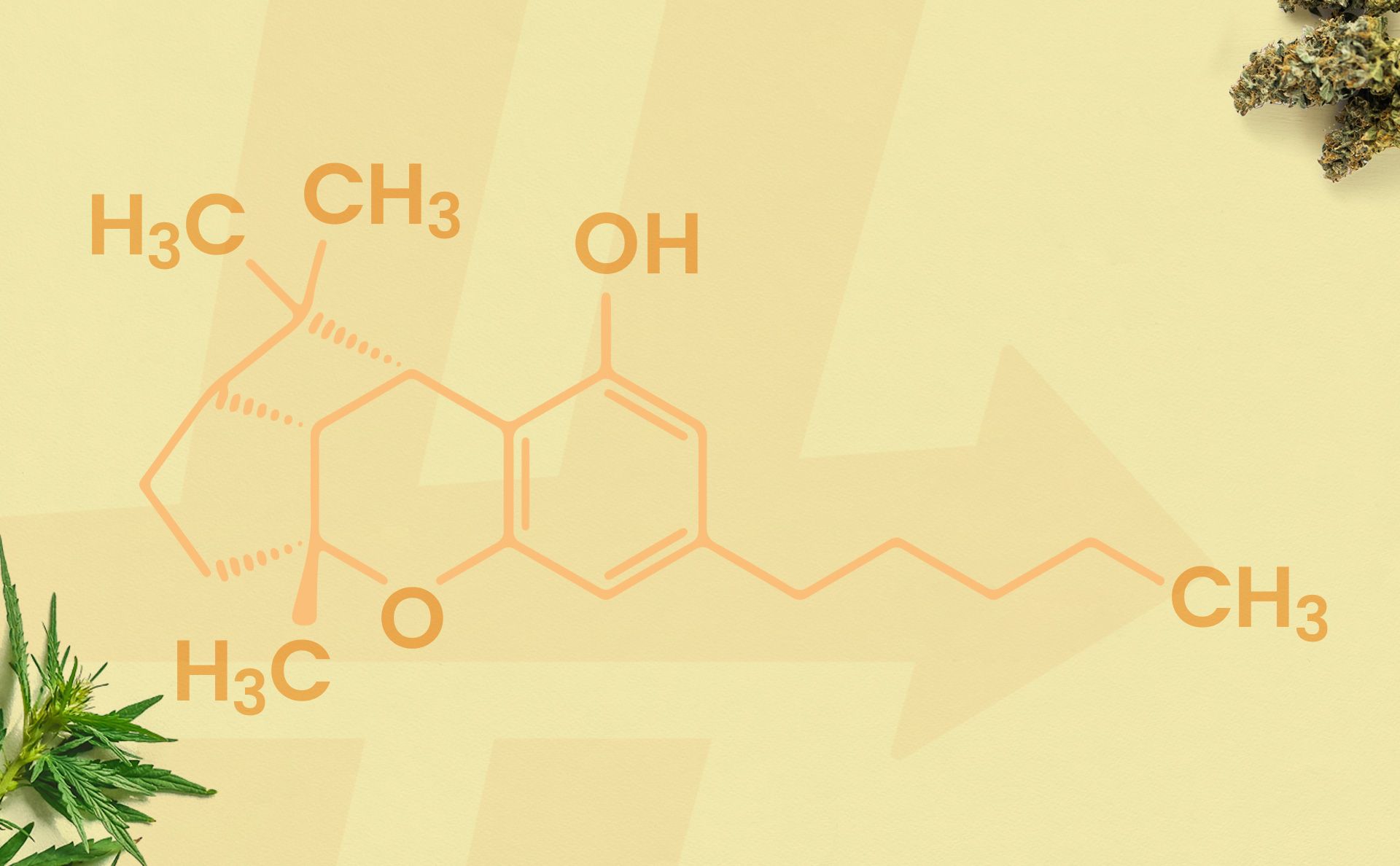
As such, it may likely share similar side effects to other non-imparting cannabinoids like CBC or CBD. But there aren't any clinical studies to know for sure.
We also don't know yet if CBL targets any other receptors in our brains that influence our mood or anxiety. If it does, it likely has a very weak effect because it’s largely inactivated by oxidation.
There is little known about this cannabinoid, but it likely shares similar much weaker potential benefits and effects as its closest parent, cannabichromene.
Research shows us that some of the potential effects of CBL include:
As an aside, there was a flawed study conducted in 1976 on inbred rabbits given CBL by IV jugular. Sparing the gruesome details, suffice to say that the experiment is unreliable and the faulty conclusions drawn (e.g., proconvulsant, coagulant) are the opposite of what we find from cannabinoids and should not truly be applied to CBL. This is important to note in case you come across this study elsewhere.

What the expert says...
"CBL forms during the degradation process of the cannabinoid CBC, to which it likely shares weaker potential effects. This oxidative process occurs when cannabis is exposed to UV light, heat, or air."
Learning about CBL is an important part of better understanding cannabis science. Here’s what we learned in the CBL chapter:
Thankfully, research on minor cannabinoids is slowly expanding, and along with it, we will eventually gain a better understanding of the potential medicinal properties and effects of cannabicyclol.
Reaching closer to the finish line! Answer the below question and keep moving along in this guide.
CBL has impairing effects.

Dr. Abraham Benavides
Dr. Abraham Benavides is an internationally-recognized cannabis research expert, experienced medical advisor, and full-tuition merit scholar of the George Washington University School of Medicine and Health Sciences. Dr. Abe enjoys helping patients as a writer, educator, and cannabis health coach at the GW Center for Integrative Medicine.